Sontecomapan Mangroves: Complete Boat Tour Guide (2026)
Imagine a labyrinth of roots and dark water where the tropical rainforest meets the Gulf of Mexico. It feels like deep Amazonia, but it is actually a short drive from the town of Catemaco. This is the Laguna de Sontecomapan — and it is one of the most biodiverse corners of the entire Los Tuxtlas Biosphere Reserve, home to American crocodiles, howler monkeys, and over 200 species of birds.
Most travel guides give this place a paragraph. It deserves its own guide.
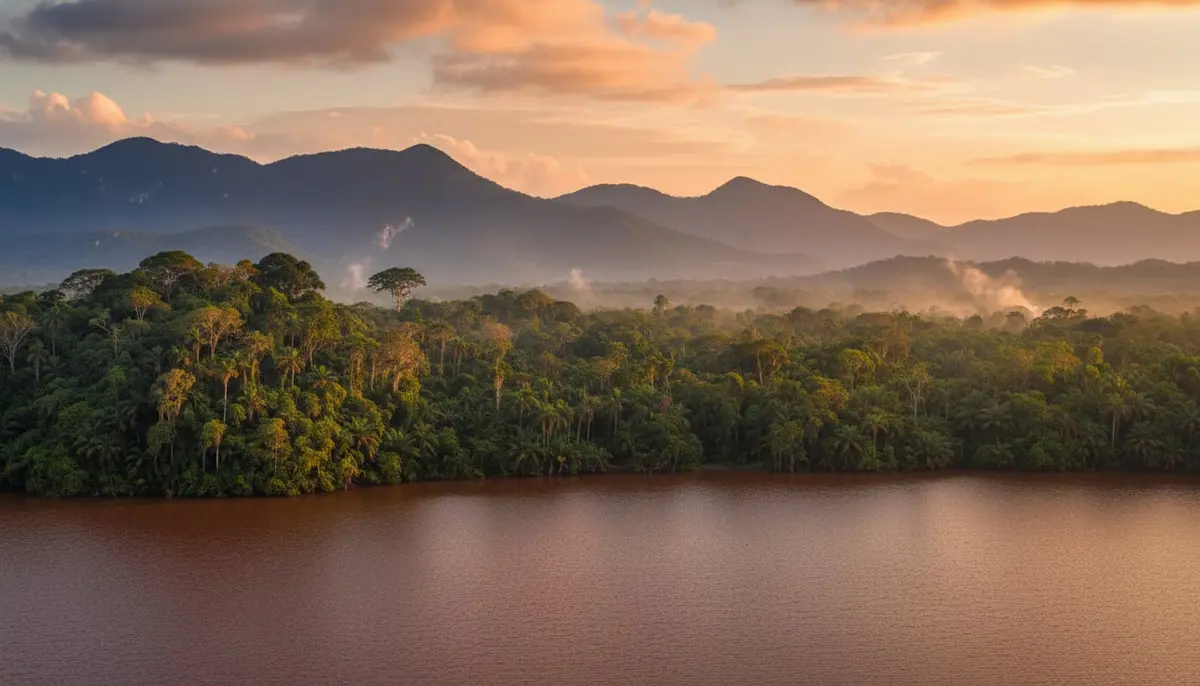
The lagoon is officially designated as a Ramsar Site — a wetland of international importance — because its 900 hectares act as a nursery for countless marine and terrestrial species. The water runs a deep reddish-brown year-round. Locals call it “agua de té” (tea water) because the tannins released by mangrove roots stain it naturally. That color is not pollution — it is a sign of exceptional ecological health.
This is one of the most rewarding wildlife experiences in all of Veracruz. Here is how to do it properly.
What Is the Laguna de Sontecomapan?
The lagoon covers roughly 900 hectares and functions as a critical ecotone — a transition zone where freshwater rushing down from the Los Tuxtlas volcanoes mixes with saltwater pushing in from the Gulf of Mexico. That brackish zone is what allows the mangroves to dominate.
The lagoon supports three distinct mangrove species documented by UNESCO’s MAB programme:
- Red Mangrove (Rhizophora mangle): The iconic species with arching prop roots standing in the water. These are the roots that create the famous tunnels.
- Black Mangrove (Avicennia germinans): Found at slightly higher elevations, with hundreds of pencil-like breathing tubes (pneumatophores) poking up from the mud.
- White Mangrove (Laguncularia racemosa): Typically found at the lagoon’s edges, identified by its lighter bark and oval leaves with small glands at the base.
Sontecomapan sits at the northern limit of the tropical rainforest in the Americas — a geographic fact that makes it irreplaceable. Species that exist nowhere else in North America beyond this latitude are present here. That is why international conservation organizations have protected it since 1998 as part of the Biosphere Reserve’s 1,551 km² core.
For full context on the region, our Ultimate Guide to Los Tuxtlas, Veracruz covers how Sontecomapan fits into a week-long itinerary.
Wildlife Watching in the Lagoon
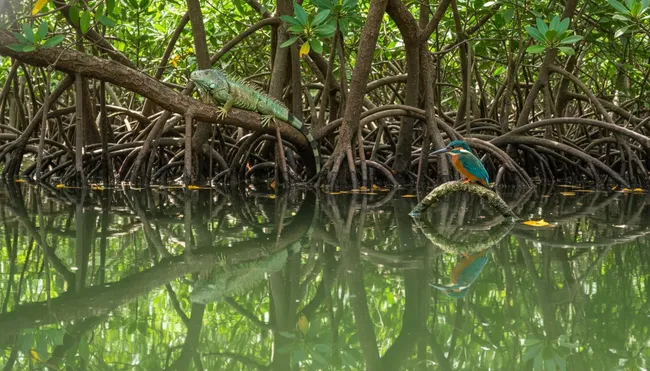 The dense root systems create perfect basking spots for iguanas, herons, and sometimes crocodiles
The boat tour on Viator is a wildlife safari as much as it is a scenic cruise. Here is what you are likely to encounter:
American Crocodiles
The lagoon’s most dramatic resident is the American Crocodile (Crocodylus acutus), one of the largest reptiles in the Americas with adults reaching up to 4 meters. Sontecomapan is one of the few easily accessible places in Mexico where you can spot them from a boat in their natural habitat.
Experienced captains know the shallow channels and muddy banks where crocodiles rest during midday heat. Morning tours (before 10 AM) offer the best sightings when the animals emerge to warm up in the early sun. If your captain offers to take you through the narrow channels — take it. That is where the encounters happen.
Safety note: Never swim in the mangrove channels or lagoon interior. La Barra beach on the lagoon side is safe for swimming because it is a wide, open sandbar where crocodiles are rarely present.
Howler Monkeys and Spider Monkeys
Howler Monkeys (Alouatta palliata) are nearly impossible to miss on a morning tour — their roar sounds like a strong wind rushing through the canopy and carries for over a kilometer. You will hear them before you see them. Once you spot a troop in the high branches above the water, watch for the young clinging to their mothers’ backs.
Spider Monkeys (Ateles geoffroyi) are shyer and rarer, preferring the taller inland trees. If your tour enters the deeper channels away from the main lagoon, scan the canopy edges carefully. Both species are among Mexico’s most interesting wildlife encounters.
Caimans vs. Crocodiles: How to Tell the Difference
The lagoon also occasionally hosts the Morelet’s Crocodile (Crocodylus moreletii) in the freshwater inlets feeding the lagoon. American Crocodiles have a longer, tapered snout and typically inhabit the saltier zones closer to La Barra. Morelet’s have a broader, rounder snout and prefer fresh water. If your captain can identify which species you are looking at — that is a sign of a knowledgeable guide.
Birdwatching: Why Sontecomapan Is World-Class
The Los Tuxtlas Biosphere Reserve records over 200 bird species, with the mangroves and lagoon edge offering access to species you cannot easily find elsewhere in Mexico. Birders specifically come to this area from North America and Europe.
Species You Are Likely to See
| Bird | When | Where to Look |
|---|---|---|
| Boat-billed Heron (Cochlearius cochlearius) | Dawn/dusk | Deep channels, low branches |
| Bare-throated Tiger Heron (Tigrisoma mexicanum) | Morning | Shallow mudflats |
| Amazon Kingfisher (Chloroceryle amazona) | All day | Hovering above channels |
| Green Kingfisher (Chloroceryle americana) | All day | Low branches over water |
| Ringed Kingfisher (Megaceryle torquata) | All day | Exposed perches |
| Neotropical Cormorant (Nannopterum brasilianus) | Morning | Log perches, open water |
| Anhinga (Anhinga anhinga) | Morning | Spreading wings to dry |
| Roseate Spoonbill (Platalea ajaja) | Morning | Shallow lagoon edges |
| Mangrove Cuckoo (Coccyzus minor) | All day | Dense mangrove canopy |
| Rufous-tailed Jacamar (Galbula ruficauda) | Morning | Forest edges near water |
Tip for birders: Bring binoculars and tell your captain you want the “ruta de los pájaros” (bird route). Most captains who run the tourist boats are excellent naturalist guides and will slow down and point out species. If you want a dedicated birdwatching tour, arrange it the evening before — early morning starts at 6:00–7:00 AM are when the lagoon is most active.
A dedicated ecotourism guide to Mexico covers what to expect from wildlife tours across different biosphere reserves.
Taking the Sontecomapan Boat Tours
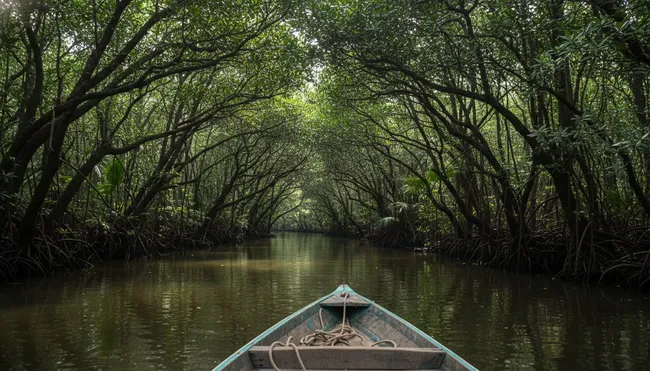 The Tunnel of Love — only accessible by small lancha, large boats cannot fit
To see the mangroves properly, you need a boat. Head to the Embarcadero (main dock) in Sontecomapan village. Negotiate the price before you step on board.
Tour Options and Current Prices
| Tour Type | What’s Included | Cost | Best For |
|---|---|---|---|
| Full Private Tour | Mangroves + Tunnel of Love + La Barra drop-off | $800–$1,200 MXN per boat | Groups of 4–6 |
| Collective to Beach | La Barra only, shared boat | ~$150 MXN per person | Solo travelers |
| Birdwatching Tour | Early morning, slow route through channels | $1,000–$1,500 MXN per boat | Birders, photographers |
| Night Tour (seasonal) | Crocodile eye-shine + bioluminescence | Ask at dock | Wildlife enthusiasts |
Prices are per boat, not per person — bringing a group of 4–6 makes the full private tour very affordable. Always negotiate in person at the dock.
The Tunnel of Love
Ask your captain specifically for the “Túnel del Amor” (Tunnel of Love). This narrow canal has red mangrove branches locking together overhead to form a natural green roof. It is completely dark inside at certain points, with only filtered light breaking through the canopy. Standard lancha boats fit — large tourist boats do not, which is why this experience is only possible with the local captains.
Cinematic connection: Your captain will likely mention that Apocalypto (Mel Gibson, 2006) used these waterways for filming, as did Medicine Man (Sean Connery, 1992). The prehistoric-looking scenery makes this immediately believable.
Tide timing: High tide creates the dramatic “flooded forest” effect where the water rises between the trunks and root systems — spectacular for photography. Low tide exposes the mudflats and root structures where crabs and wading birds feed. Both are worth experiencing.
Best Time to Visit Sontecomapan
| Season | Months | Conditions | Wildlife | Verdict |
|---|---|---|---|---|
| Dry Season | Nov–Apr | Clear skies, lower humidity, calmer water | Excellent | ✅ Best time |
| Cool Dry | Jan–Feb | Coolest temps, occasional norte (north winds) | Good | ✅ Great for birding |
| Hot Dry | Mar–Apr | Very hot, excellent visibility | Excellent | ✅ Best boat conditions |
| Rainy Season | Jun–Oct | Afternoon storms, flooded roads possible | Good | ⚠️ Check road conditions |
| Transition | May, Nov | Unpredictable but usually fine | Good | ✅ Fewer crowds |
The single most important timing factor is time of day, not season. Wildlife activity peaks between 6:00 and 10:00 AM. Crocodiles bask, birds feed, and monkeys move. By 11:00 AM, most animals retreat into shade.
Book morning tours. Arrive at the dock before 8:00 AM on weekdays if possible. Weekends bring more domestic visitors, which can mean a livelier atmosphere at La Barra but more boat traffic in the channels.
The rainy season (June–October) is not off-limits. The lagoon turns a deeper green, the channels run fuller, and the vegetation is lush. But afternoon storms are common, road drainage can be poor on the winding route from Catemaco, and humidity is extreme. Pack accordingly.
For broader context, our Best Time to Visit Mexico guide includes a Veracruz section covering seasonal weather across the state.
Relaxing at La Barra de Sontecomapan
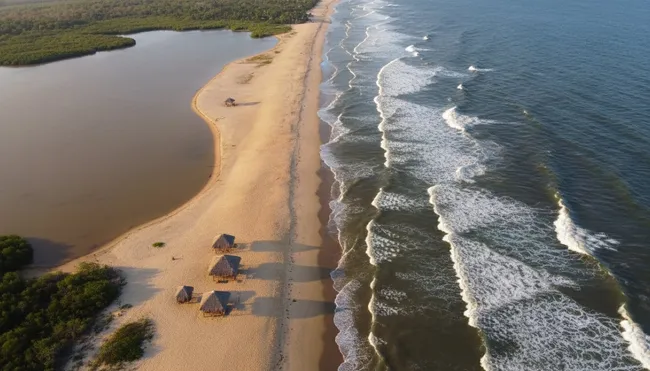 La Barra: lagoon on one side, Gulf of Mexico on the other
The boat tour on Viator ends at La Barra — a narrow sandbar separating the lagoon from the open Gulf. You can literally stand with your feet in both water bodies at the same time.
Critical safety rule: The lagoon side is calm and safe for swimming. The Gulf side has powerful rip currents and undertows — do not enter regardless of how inviting it looks. The same force that makes the river mouth scenic creates dangerous conditions for swimmers.
Facilities at La Barra are rustic:
- Outdoor showers and restrooms available (fee: $10–$20 MXN)
- Palapa restaurants along the sandbar (cash only)
- Zero cell signal — bring cash and plan ahead
- No ATMs — withdraw in Catemaco before you go
The sandbar’s remoteness is part of its appeal. When the tourist boats aren’t present, it genuinely feels like the end of the world.
Barra de Sontecomapan Restaurants and Local Food
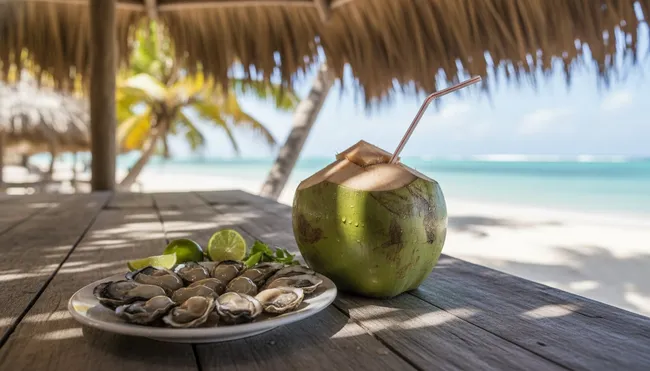 Ostiones de Mangle and Coco con Ginebra — the signature food and drink combination
The palapa restaurants at La Barra serve some of the most authentic Gulf Coast seafood in Veracruz. Skip anything that looks generic and order from the local specialty menu:
Must-order: Ostiones de Mangle (Mangrove Oysters)
These wild oysters grow directly on submerged mangrove roots. The brackish water gives them a uniquely intense brininess compared to deep-water farmed varieties — smaller, saltier, and more mineral. They are typically served raw with lime, or grilled on the half-shell with salsa macha.
Local drinks:
- Coco con Ginebra — fresh green coconut cracked open and filled with gin. Served with a straw. This is the signature drink of the Sontecomapan coast.
- Torito — a creamy regional liqueur made from cachaça blended with fruit (peanut, guanabana, and mango are the most common flavors)
- Agua de Jamaica — for non-drinkers, the hibiscus agua fresca here is excellent
Logistics warning: Cash only at every establishment. No cell signal means no card terminals work. Prices are negotiated verbally — always ask “¿A cómo la orden de…?” (How much for an order of…?) before you order. Prices can vary between palapa operators.
For more on the coastal cuisine of Veracruz, the Coatzacoalcos restaurant guide covers the regional flavor profile of the southern Gulf Coast.
What to Bring
Packing correctly makes a significant difference in the mangroves. The environment is humid, wet, and bright:
Essential:
- Cash (MXN) — no ATMs at La Barra, limited at Sontecomapan village
- Bug repellent — mosquitoes in the channels, especially dawn/dusk
- Sunscreen — surprisingly intense reflection off water
- Water — buy in Catemaco; La Barra shops have limited stock
- Waterproof bag or dry sack — for your phone and camera on the boat
- Closed-toe shoes — mudflats and dock can be slippery; sandals are risky
Strongly recommended:
- Binoculars — essential for birdwatching; crocodile spotting from a distance
- Hat — the boat provides no shade on the open lagoon sections
- Change of clothes — boat spray and La Barra swimming will get you wet
- Sunglasses with polarized lenses — cuts the water glare dramatically
For photographers:
- A telephoto lens (200–400mm) transforms the bird encounters
- Silica gel packets in your camera bag — humidity is extreme
- Shoot during the first and last hours of light (the mangrove channels are dark mid-day)
Photography Tips for the Mangroves
The Sontecomapan mangroves offer some of the most dramatic light conditions in Veracruz. Here is how to make the most of them:
Tunnel of Love: Shoot toward the light source (the opening ahead) for the best silhouette effect. A wide-angle lens (16–24mm) captures the full tunnel architecture. Use manual exposure — your camera’s auto mode will overexpose the bright opening.
Wildlife: Set burst mode for crocodile and monkey shots. Animals move unpredictably. A fast shutter speed (1/500s minimum) prevents blur on moving subjects.
Water color: The tea-colored water photographs beautifully in golden hour light. The contrast between the brown water, green roots, and blue sky is strongest in early morning and late afternoon.
La Barra panoramics: Use portrait orientation for the “two-ocean” shot (lagoon on one side, Gulf on the other). Wide shots at dawn show the dramatic horizon before boats arrive.
How to Get to Sontecomapan from Catemaco
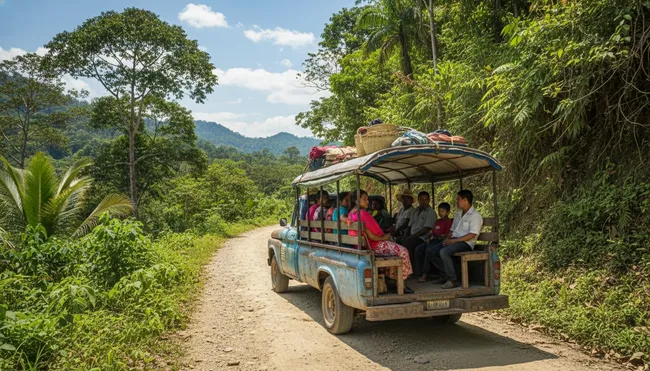 The camioneta ride through the jungle hills is half the adventure
Getting here is part of the experience. The winding road from Catemaco descends through tropical hills with occasional glimpses of the lagoon below.
Do not go to the ADO bus station — they don’t service Sontecomapan. Transport leaves from the Mercado Municipal in Catemaco. Ask for the corner near the store “La Bruja.”
Transport Options
| Option | Cost | Time | Details |
|---|---|---|---|
| Camioneta colectiva | $30–$40 MXN/person | 20–30 min | Pickup truck with bench seating; wait until full |
| Taxi colectivo | $35–$45 MXN/person | 20 min | Usually a red/white Nissan Tsuru |
| Private taxi | $250–$350 MXN (whole car) | 20 min | Arrange at taxi stand near market |
| Car rental | — | 20 min | Road is paved; standard car handles it fine |
Critical: The last collective transport back to Catemaco leaves La Barra or the Sontecomapan dock around 5:30–6:00 PM. Miss it and you face a private charter for $300+ MXN or waiting for a passing vehicle. Plan your return before you leave.
From Veracruz City: Take an ADO or AU bus to San Andrés Tuxtla or Catemaco (2.5–3 hours), then catch the colectivo from Catemaco as above.
If you plan to make the most of an early morning wildlife start, staying in Catemaco the night before is the smart move. Our guide to the best hotels in Catemaco covers every budget level from eco-lodge to budget hostel.
Nearby Attractions: Building a Full Day
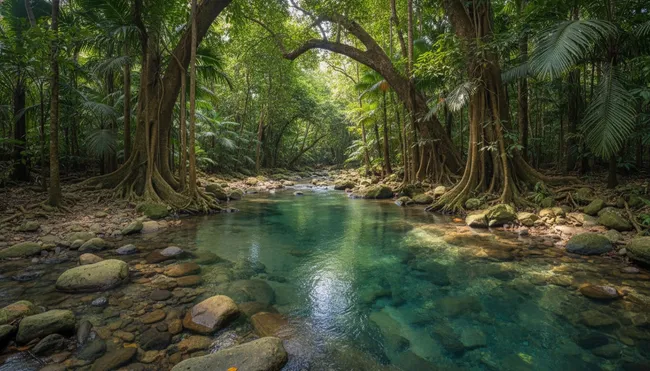 Poza de los Enanos — a freshwater swimming stop on the road to Sontecomapan
The 20-minute road from Catemaco to Sontecomapan passes through several worthwhile stops.
Poza de los Enanos (on the road to Sontecomapan, village of Coxcoapan): A crystal-clear freshwater stream with natural swimming pools. Entry is $20–$30 MXN. Weekends get crowded and festive; weekdays are peaceful. Note the strict “No Glass Bottles” rule.
Nanciyaga Ecological Reserve: A curated eco-lodge and jungle reserve on the shores of Lake Catemaco, 20 minutes from Catemaco town. Offers guided jungle walks, volcanic mud masks, and birdwatching. Our Nanciyaga Ecological Reserve guide covers what to expect.
Salto de Eyipantla: The massive 50-meter waterfall filmed in Apocalypto, a 40-minute drive from Catemaco. Combine it with a Sontecomapan day if you have a car. Our guide covers the famous 244 steps down to Eyipantla Falls.
Roca Partida: A dramatic sea stack in the Gulf of Mexico, accessible by boat from the fishing village of Montepío. Less visited than Sontecomapan and more rugged — see the full Roca Partida guide for logistics.
Suggested Full Day Itinerary
| Time | Activity |
|---|---|
| 7:00 AM | Leave Catemaco via camioneta |
| 7:30 AM | Arrive Sontecomapan dock; board boat for wildlife/bird morning tour |
| 9:30 AM | Arrive La Barra; swim in lagoon, explore sandbar |
| 11:00 AM | Late breakfast/brunch at La Barra palapa (ostiones, torito) |
| 1:00 PM | Return boat to Sontecomapan dock |
| 1:30 PM | Stop at Poza de los Enanos for freshwater swim |
| 3:30 PM | Return to Catemaco |
| 5:00 PM | Explore Catemaco market and lake waterfront |
Practical Information at a Glance
| Detail | Information |
|---|---|
| Location | Sontecomapan village, Los Tuxtlas, Veracruz |
| From Catemaco | 20–30 min by colectivo ($30–40 MXN) |
| Boat tour hours | ~7:00 AM – 4:00 PM (last return transport ~5:30 PM) |
| Private lancha | $800–$1,200 MXN per boat |
| Collective to beach | ~$150 MXN per person |
| La Barra facilities | Restrooms ($10–20 MXN), outdoor showers, palapa restaurants |
| Payment | Cash only — no ATMs, no cell signal at La Barra |
| Cell service | None at La Barra; minimal in Sontecomapan village |
| Best visit time | 7:00–10:00 AM for wildlife; dry season (Nov–Apr) for best conditions |
| Ecological status | Ramsar Site (Wetland of International Importance) since 1995 |
| Part of | Los Tuxtlas UNESCO Biosphere Reserve (1,551 km²) |
Conclusion
The Laguna de Sontecomapan is not a side attraction — it is one of the best ecotourism destinations in Veracruz. Crocodiles, howler monkeys, 200+ bird species, a world-class mangrove tunnel, fresh oysters on a sandbar, and an authentic Gulf Coast beach experience: few half-day trips in Mexico pack this much in. Before you go, make sure your travel insurance covers emergency care for remote wildlife trips.
Arrive before 8:00 AM, hire a private lancha, ask for the Tunnel of Love and the crocodile channels, eat the oysters, drink the coco con ginebra. You will leave with photographs that look impossible for a day trip.
From here, the next big adventure in Los Tuxtlas is a short drive away. The Salto de Eyipantla Waterfall makes a perfect second half to a two-stop day. Or if you want more wildlife depth, the Nanciyaga Ecological Reserve offers a different but equally wild experience in the same biodiverse corner of Veracruz.
For the full regional picture — including how to plan a week across Los Tuxtlas — return to the Ultimate Guide to Los Tuxtlas, Veracruz.