Cancun Sargassum Today 2026: Map & Clear Beaches
Cancun Sargassum Today in 30 Seconds
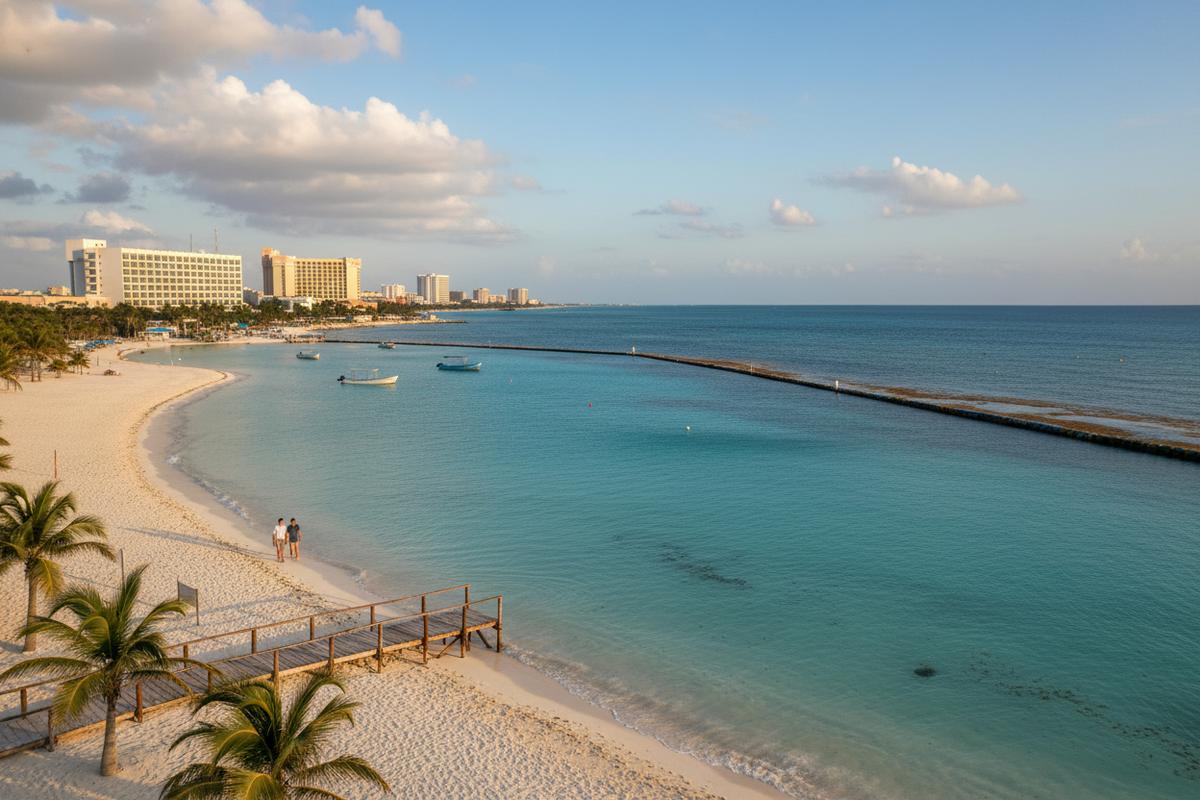
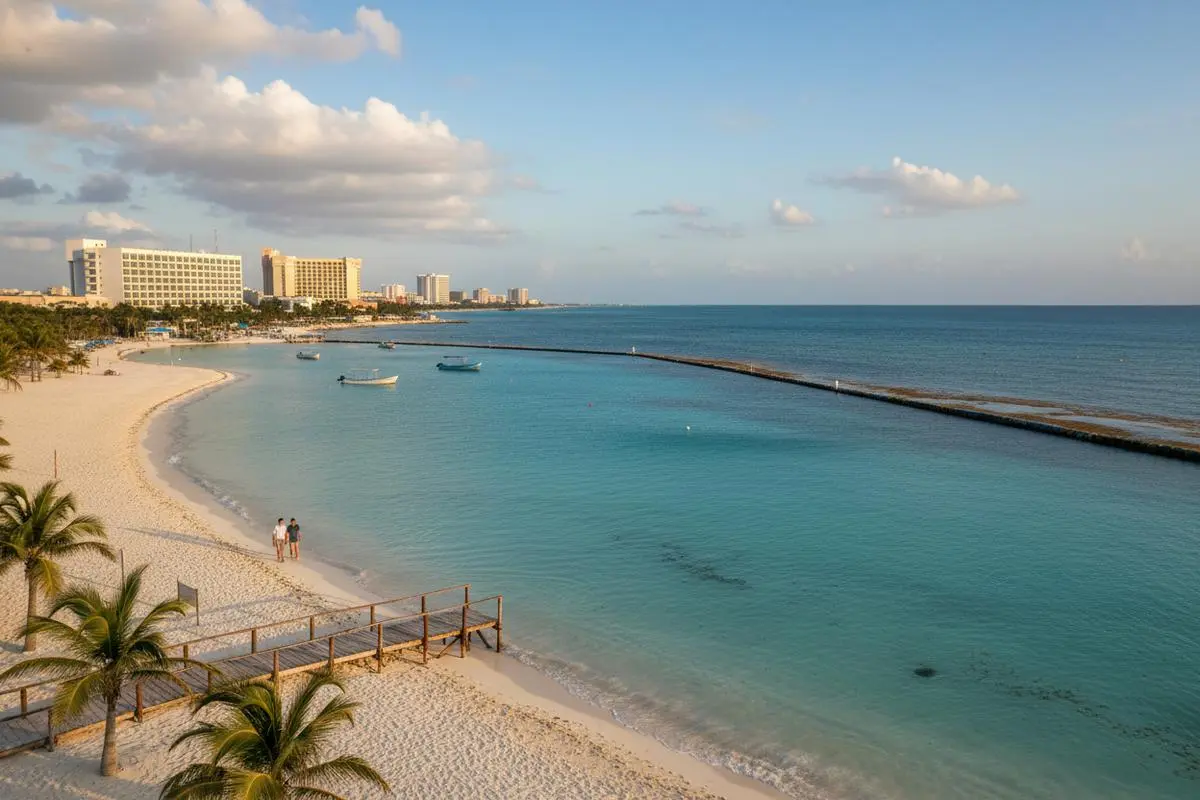
Cancun sargassum today depends on wind, beach angle, and cleanup timing, so check a live map before you judge your exact travel week. The usual high-risk season runs from May through August, but conditions can change fast from one Hotel Zone section to another. Start with current reports, then use the northern Hotel Zone, protected resort stretches, Isla Mujeres, and cenotes as your practical backup plan. Cancun is not immune, but it is one of the easier Mexican Caribbean bases to manage because the Hotel Zone curves, cleanup is organized, and you can quickly pivot when the beach is messy.
If you want the short answer: Cancun is a better sargassum-season choice than Playa del Carmen or Tulum for travelers who want resort infrastructure and backup plans. It is worse than the Pacific coast if your only goal is seaweed-free sand. For the full coast-level picture, start with the Mexico sargassum season guide.
The main mistake is booking Cancun as if every beach day will be perfect. In July, a smart Cancun trip includes a hotel with a strong pool, a ferry plan for Isla Mujeres, one inland day, and a daily check of live conditions from tools such as NOAA’s Sargassum Inundation Risk, Sargassum Monitoring’s official map, and How Is The Sargassum.
Costs are manageable if you plan ahead. Isla Mujeres ferry days can cost $16-35 USD ($272-595 MXN) per adult before food or golf carts. Cenote tours range from $40-120 USD ($680-2,040 MXN). A private transfer to a cenote route can run $80-180 USD ($1,360-3,060 MXN) depending on distance and vehicle size.
Which Cancun Hotel Zone Beaches Are Safer
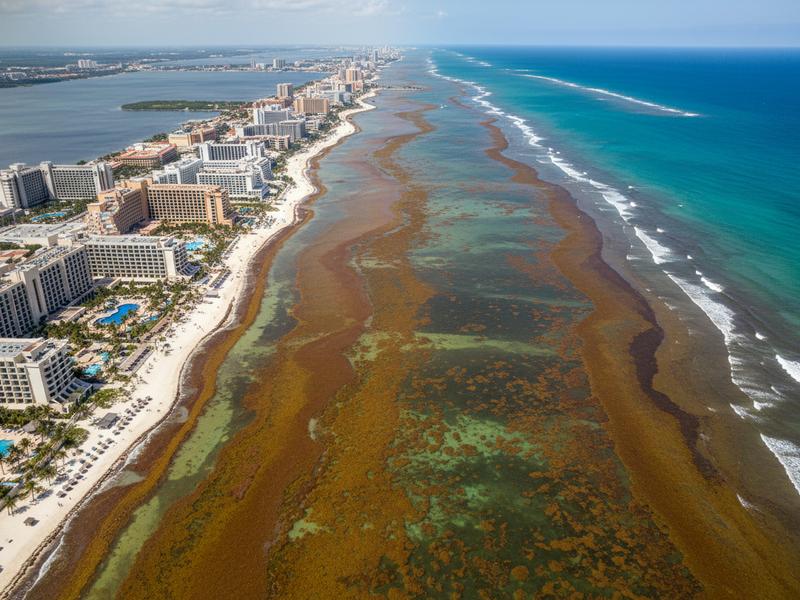
Cancun’s advantage is shape. The Hotel Zone is not one straight beach. Some sections face the open Caribbean more directly, while others are tucked into angles that can reduce incoming seaweed. That does not create a guarantee, but it gives Cancun more variation than a long exposed strip.
The northern Hotel Zone and beaches with more protected water often have better odds during sargassum waves. They also tend to have calmer swimming, which helps families. East-facing beaches can still be stunning, especially outside heavy arrivals, but they are more exposed to wind-driven mats. Playa Delfines, for example, can be gorgeous and photogenic, yet it is not the place I would rely on as my only summer beach plan.
When comparing hotels, zoom into the map and read reviews by beach name, not just “Cancun.” Search recent reviews for “seaweed,” “sargassum,” “smell,” “beach crew,” and “barrier.” A hotel that cleans early and honestly communicates conditions is worth more than a hotel that shows perfect winter photos on the booking page.
For broader resort choices, pair this guide with best hotels in Cancun and Cancun all-inclusive resorts. If you are traveling with children, also read Cancun with kids because pool quality, shade, food access, and short transfers matter more when the beach is not reliable.
Cancun vs Playa del Carmen vs Tulum
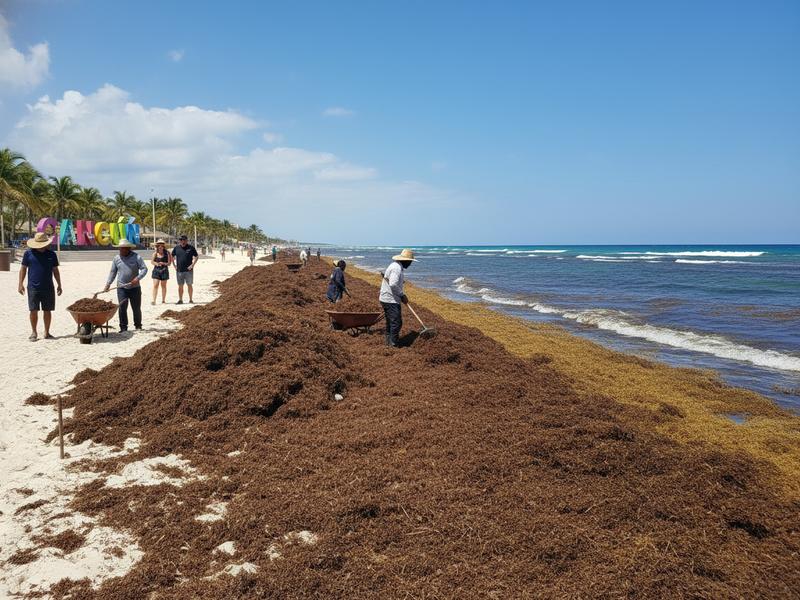
Cancun wins on backup infrastructure. You have the airport, large resorts, better pool complexes, shopping, restaurants, nightlife, ferries, and fast day-trip operators. If sargassum is heavy for two days, you can still fill the trip.
Playa del Carmen wins on walkability. You can leave your hotel, eat well, take the Cozumel ferry, and move around without living inside a resort. The tradeoff is beach exposure. Many central beaches face incoming seaweed directly, and the shoreline can feel narrow when cleanup crews are working.
Tulum wins on design, cenotes, and a more nature-focused itinerary, but it can be the most frustrating if you paid high beachfront rates expecting perfect water. If Tulum is your dream, summer can still work, but only if you treat beach time as a bonus rather than the whole point. Read Tulum hurricane season before booking late summer or fall.
For many first-time summer travelers, the safest Caribbean order is: Cancun for resort backup, Isla Mujeres for clearer water odds, Cozumel for snorkeling and west-coast protection, Playa del Carmen for walkability, then Tulum only if you already want cenotes, food, and design more than guaranteed swimming.
Best Cancun Backup Days When Seaweed Is Bad
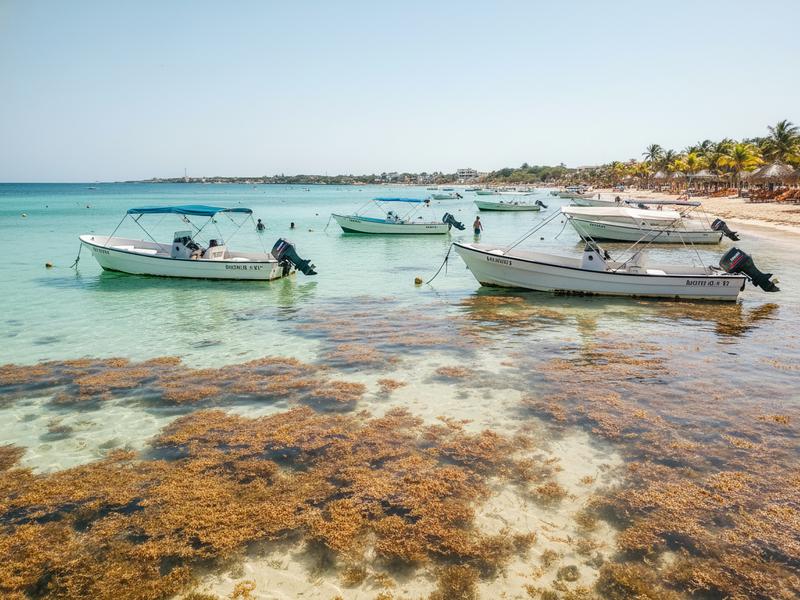
A bad beach morning in Cancun does not have to become a bad travel day.
The easiest pivot is Isla Mujeres. Take the ferry from Puerto Juarez or the Hotel Zone, check Playa Norte first, and rent a golf cart only if conditions look good enough to justify a full island day. A ferry plus local transport, food, and chairs can easily reach $60-120 USD ($1,020-2,040 MXN) per person, but it often saves the trip.
The second pivot is a cenote route. Cenotes near Puerto Morelos, the Ruta de los Cenotes, and routes toward Valladolid offer clear freshwater that seaweed cannot touch. Group tours usually cost less; private drivers cost more but save time. If you want ruins too, combine cenotes with Coba, Ek Balam, or Chichen Itza.
The third pivot is a food and city day. Cancun is not Mexico’s deepest food city, but you can still build a good day around local seafood, markets, downtown restaurants, and a sunset lagoon plan. For ideas, use best restaurants in Cancun and things to do in Cancun.
How to Choose a Cancun Hotel in Peak Seaweed Months

Use a three-part filter: beach angle, pool quality, and cancellation flexibility.
Beach angle is the most important. Do not rely on generic “beachfront” wording. Open the map, identify the exact section, and read recent guest photos. Pool quality is second because it becomes your base when the water is brown. Look for shade, enough loungers, family zones if needed, and food service that does not require leaving every afternoon.
Cancellation flexibility is third. During May-August, I would rather pay $30 USD ($510 MXN) more per night for a cancellable rate than lock into a cheap non-refundable room on an exposed beach. If live maps show a heavy arrival five days out, you may want to switch from a beach-first resort to a pool-first hotel, or from Cancun to Isla Mujeres or Cozumel.
Ask the hotel direct questions before arrival: Do you have daily cleanup? Are barriers installed? Which beach section is currently clearest? Are beach loungers available if cleanup crews are working? The answer quality tells you a lot.
Final Cancun Sargassum Advice
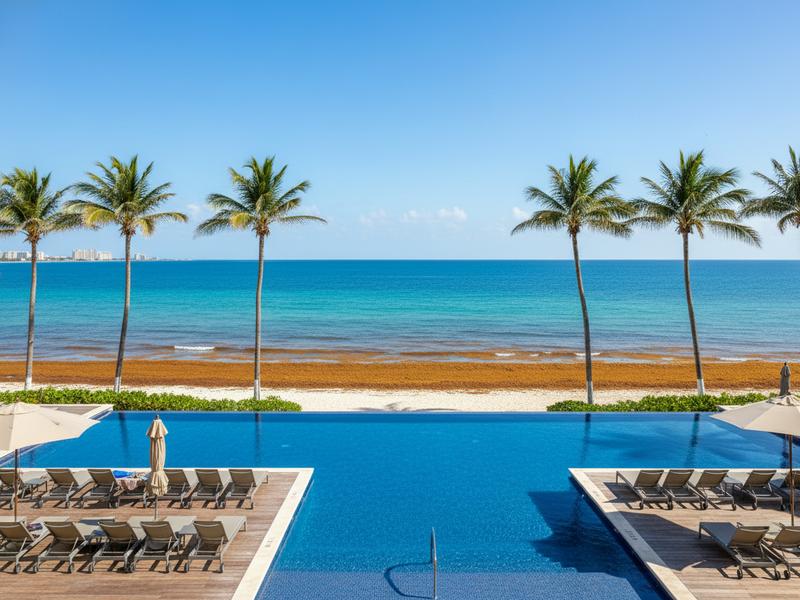
Cancun is not the Caribbean’s magic exception, but it is one of the better places to absorb a messy seaweed week. The airport is close, the Hotel Zone has variation, resort crews are used to the problem, and day-trip infrastructure is strong.
Book Cancun in summer if you want a resort base with options. Avoid it if you need every morning to look like a postcard. If you are flexible on coast, compare Mexico beaches without sargassum before you commit. If you stay Caribbean, keep the Isla Mujeres sargassum guide open as your clean-water escape plan.
My Cancun booking filter
If I were choosing a Cancun hotel for June, July, or August, I would start with a map before price. I would rather stay on a more protected stretch with a slightly older room than book a prettier room on a beach that gets hammered by every east wind. After map position, I would check pools, shade, and recent reviews. Only then would I compare meal plans and room categories.
I would also avoid building the trip around one prepaid beach club or one photo spot. Cancun works in sargassum season because it has layers: resort pools, Isla Mujeres, cenotes, restaurants, shopping, nightlife, ruins, and easy transfers. If you book a hotel that makes those layers easy, you have a strong trip. If you book a hotel that traps you on one exposed beach, you are gambling.
What families should do differently
Families should stay practical. Choose a resort with a pool your kids will actually love, not just a pretty beach photo. Look for shallow pool areas, shade, easy lunch, and rooms close enough that naps do not require a hike. If the beach is clear, great. If not, the pool day still feels like vacation.
Do not overbook long day trips. One cenote or Isla Mujeres day can save the week; four expensive backup tours can exhaust everyone. Budget at least $250-500 USD ($4,250-8,500 MXN) for a family of four in flexible backup costs. That covers some combination of ferry tickets, taxis, cenote entrances, food, and a private transfer if needed.
What couples and friend groups should do
Couples should be careful with beachfront romance packages in peak seaweed months. A room with a plunge pool, good dining, and a nice spa may be more valuable than a beach cabana you cannot use. Friend groups should stay where taxis, restaurants, bars, and ferries are easy. A group can pivot quickly if everyone is not waiting for a resort shuttle.
For nightlife-focused trips, Cancun is one of the safer sargassum-season picks because the beach is not the only activity. For quiet beach-focused honeymoons, I would either move dates or compare the Pacific. The right answer depends on what would actually disappoint you.
The Cancun decision in plain English
Book Cancun in sargassum season for convenience, resort infrastructure, and backup options. Do not book it because someone promised the beach would be clear. No honest planner can promise that in July.
A realistic three-night Cancun plan
For a short Cancun stay in July, I would keep the plan simple. Day one is arrival, pool, dinner, and a beach walk only if conditions are good. Day two is the best local beach window early, followed by pool time or downtown food if the shoreline gets messy. Day three is the flexible day: Isla Mujeres if the island looks clear, cenotes if the whole coast looks rough, or a ruins trip if you want to escape the humidity near the water.
This style avoids the common trap of scheduling the most expensive beach activity before you know the conditions. It also keeps costs under control. A couple might spend $80-180 USD ($1,360-3,060 MXN) total on a ferry and food day, or $120-260 USD ($2,040-4,420 MXN) on a more comfortable cenote or ruins day. That is much easier to accept when it was planned as part of the trip rather than treated as an emergency.
What to ask Cancun hotels before arrival
Ask for current beach conditions in plain language. Do not ask, “Is the beach nice?” Ask: how much sargassum arrived this week, what time cleanup starts, whether swimming is currently comfortable, and which nearby beach section is clearer. A good hotel will answer directly. A vague answer full of brochure language is not useful.
Also ask about pool access after checkout, day-bed policies, and whether beach restaurants remain pleasant when cleanup is happening. If your flight leaves late, a hotel that lets you use the pool and showers after checkout can turn a bad final beach day into a comfortable one. These small operational details matter more during seaweed season than during perfect winter weather.
When to switch away from Cancun
Switch away from Cancun if you are booking mainly for transparent Caribbean water and your dates are flexible. Moving to late winter may be smarter than forcing August. Switch to the Pacific if your dates are fixed and your group will be unhappy without reliable beach mornings. Stay with Cancun if direct flights, resort ease, kids programs, nightlife, and day trips matter as much as the beach itself.