Mexico Sargassum Season 2026: Worst Months & Map
Mexico Sargassum Season in 30 Seconds
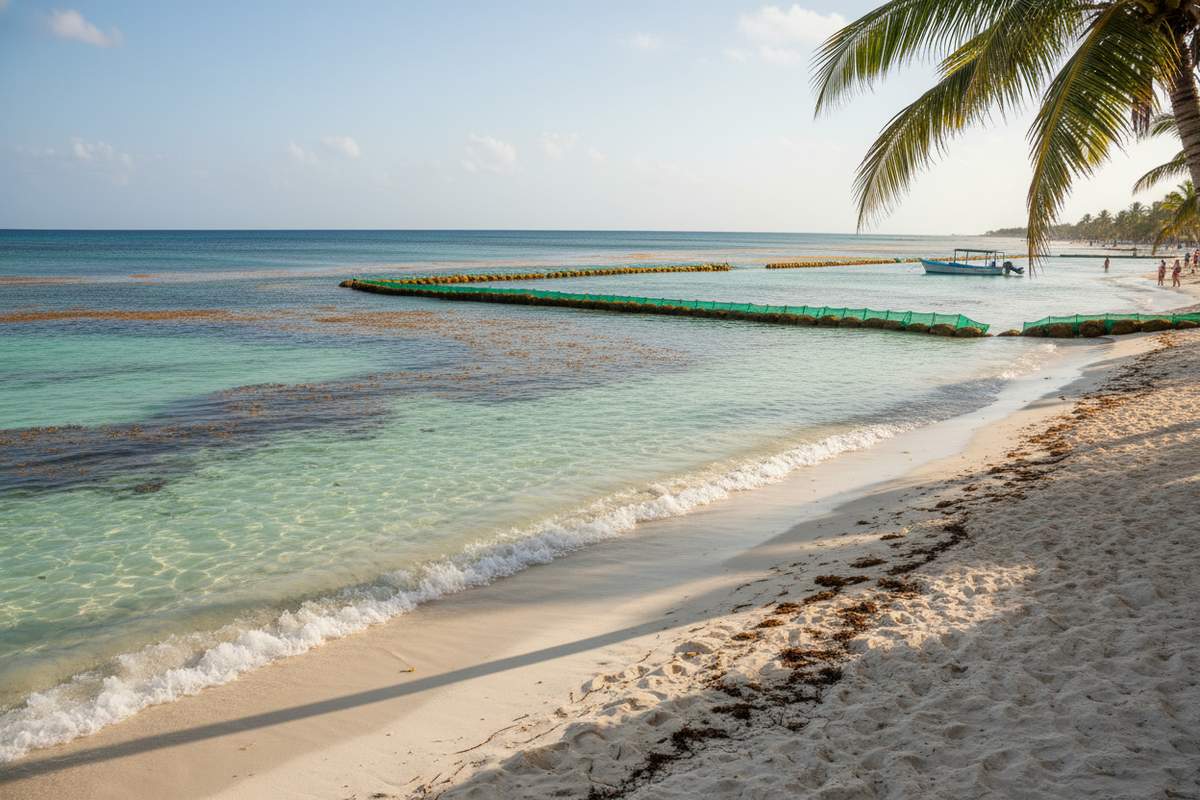
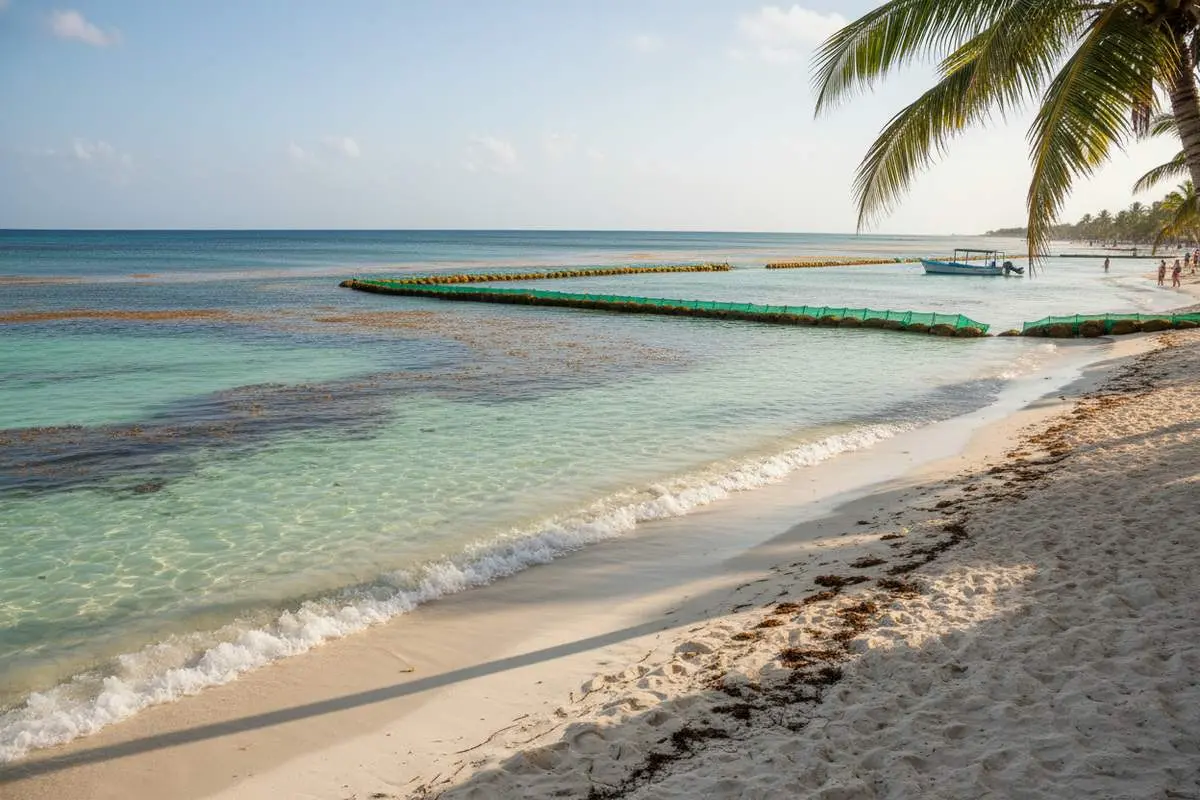
Mexico sargassum season usually runs from March through October, with the worst beach risk from May through August on the Caribbean coast. If you are searching in summer 2026, check live maps before you panic-book or cancel: Cancun, Playa del Carmen, Tulum, Akumal, Puerto Morelos, and exposed Riviera Maya beaches need the closest checks, while Pacific and Baja beaches such as Puerto Vallarta, Huatulco, Los Cabos, and La Paz do not get Caribbean sargassum.
If you are planning a July or August beach trip, do not panic and do not ignore it. The smart answer is to book a destination with options. Cancun gives you Hotel Zone beaches, pools, day trips, and ferries. Isla Mujeres often has clearer water on Playa Norte. Cozumel’s west coast can be a good pivot. Puerto Vallarta, Huatulco, Zihuatanejo, Los Cabos, and La Paz skip the sargassum issue entirely, though they have their own summer tradeoffs such as rain, humidity, and bigger Pacific surf.
For context, NOAA’s Sargassum Inundation Risk system tracks daily risk across the Caribbean and Gulf, while the University of South Florida Sargassum Watch System publishes satellite-based outlooks. Those tools are useful because sargassum does not behave like a fixed weather season. Currents, wind, beach angle, and cleanup capacity can make one beach unpleasant while another beach 20 minutes away is fine.
The rest of this guide gives you the practical travel version: when the seaweed usually arrives, which Mexico beaches are most exposed, which places are safer, how to choose a hotel, what to budget for plan-B days, and how to build a beach trip that still works if your first-choice shoreline gets hit.
Internal planning links for this cluster: start with the Cancun sargassum season guide if you want the easiest resort base, compare the Playa del Carmen sargassum season guide if you prefer walkability, use Isla Mujeres sargassum season for clean-water pivots, and keep Mexico beaches without sargassum open if you are flexible on coast.
When Sargassum Hits Mexico by Month
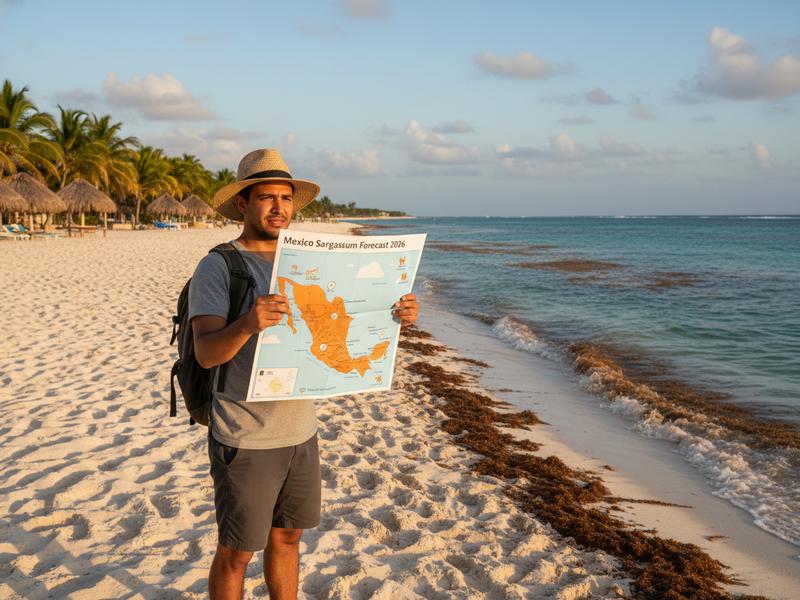
Sargassum can appear in any warm month, but travel planning needs simple odds. March and April are the early-warning months. You may see small landings, especially after windy days, but plenty of beach trips still feel normal. May and June are when risk becomes harder to ignore. If satellite maps show a heavy belt moving through the Caribbean, exposed Riviera Maya beaches can shift from blue to brown within a day or two.
July and August are the months that matter most for summer travelers. This is also when families book school-vacation resort stays, whale shark tours run near Holbox and Isla Mujeres, and inland Mexico enters green season. Prices can be better than Christmas or Easter, but the tradeoff is that Caribbean beach quality becomes less predictable. If your goal is one perfect beachfront week, you need a backup. If your goal is cenotes, food, ruins, pools, and occasional clear-water beach days, summer can still work.
September and October are mixed. Tropical-storm risk rises, sargassum can still arrive, and some hotels use this period for maintenance. The upside is lower rates. A room that costs $350 USD ($5,950 MXN) in high season may drop closer to $180-230 USD ($3,060-3,910 MXN), especially outside top all-inclusive resorts. That discount is only worth it if you are comfortable with flexible plans.
November through February is the safer Caribbean beach window. No month is mathematically guaranteed, but winter has a much lower sargassum risk and better swimming conditions. If clear turquoise water is the whole reason for the trip, winter or early spring beats peak summer.
The key is to separate sargassum from rain. A rainy afternoon can clear by dinner. Heavy sargassum can affect smell, swimming, and photos for several days if cleanup crews and currents do not cooperate. For broader weather planning, read our Mexico rainy season guide and Mexico in summer guide before choosing dates.
Beach Risk: Cancun vs Riviera Maya vs Islands
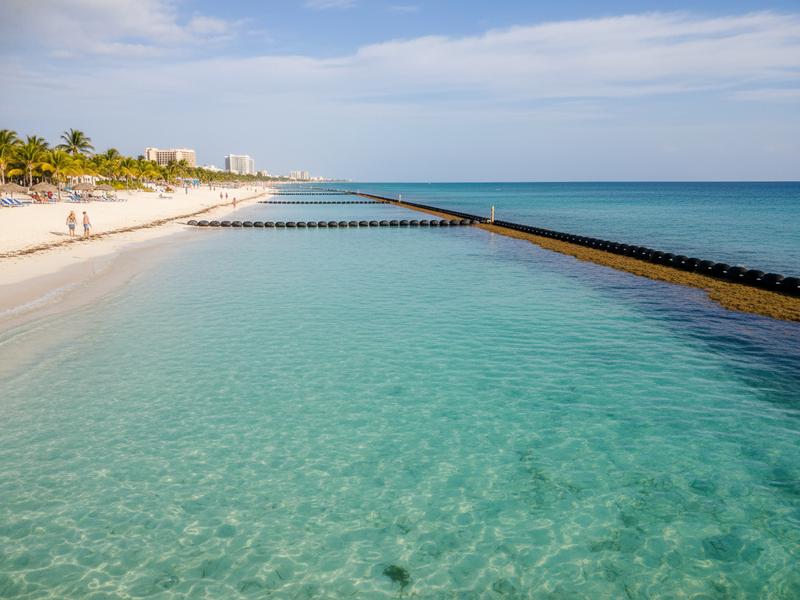
Sargassum risk is not equal across the Mexican Caribbean. Geography decides more than marketing copy.
Cancun Hotel Zone has a curve that creates different exposures. East-facing beaches can receive seaweed, while north-facing and more protected sections are often calmer. This is why Cancun is a safer summer pick than many travelers expect. You can still wake up to brown water, but you have more beach-hopping options, strong cleanup crews, pools, restaurants, malls, ferries, and day trips. Our detailed best time to visit Cancun guide explains the weather side.
Puerto Morelos, Playa del Carmen, Akumal, and Tulum face the Caribbean more directly. These places can be wonderful when conditions are clear, but they are also more exposed during heavy arrivals. Playa del Carmen has the advantage of walkability and fast ferries to Cozumel. Tulum has beautiful hotel design and cenote access, but the beach can be a bigger gamble. For the storm-season side, read Tulum hurricane season.
Isla Mujeres is the classic pivot because Playa Norte faces northwest and is naturally protected. It can still see seaweed, especially after certain wind shifts, but it is often clearer than mainland beaches. Cozumel is similar: the west coast, where most visitors swim and snorkel, is generally better protected than the island’s wild east side. If you want reefs, day trips, and a beach plan with lower sargassum risk, compare our Isla Mujeres sargassum season guide, Cozumel sargassum season guide, and Cozumel travel guide.
A practical rule: if a beach faces straight east into open Caribbean water, treat it as higher risk in summer. If it faces north, west, or sits behind island protection, it usually has better odds.
How to Book Hotels During Sargassum Season
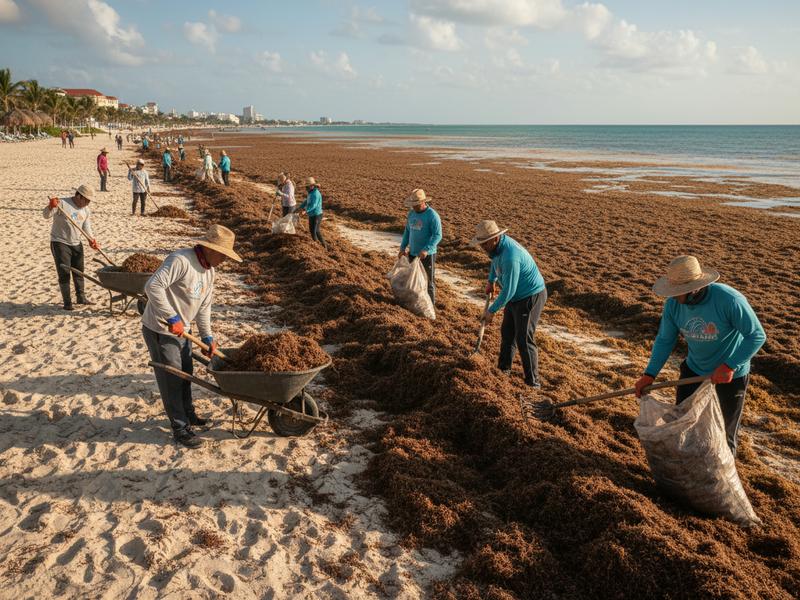
The hotel decision matters more than the destination name. A weak hotel on a good beach can feel worse than a strong hotel with good pools, transport, and day-trip access.
First, look for recent reviews from the same month. A January review saying “clear water” tells you almost nothing about July. Search the review text for “sargassum,” “seaweed,” “smell,” “cleanup,” “barrier,” and “beach crew.” If multiple guests from the past two weeks say the hotel cleaned early every morning, that is a useful signal. If guests say the hotel blamed nature and did little, believe them.
Second, choose a property with a good non-beach day. In Cancun, that can mean a strong pool deck, shade, kids club, and easy taxi access. In Playa del Carmen, it can mean walkability to restaurants plus ferry access to Cozumel. In Isla Mujeres, it can mean staying near Playa Norte so you can walk to the clearest section each morning. For resort research, use our best hotels in Cancun, best hotels in Playa del Carmen, and best hotels in Isla Mujeres.
Third, avoid non-refundable beachfront splurges during peak sargassum months unless the discount is huge. A flexible booking may cost $25-60 USD ($425-1,020 MXN) more per night, but that can be cheap insurance if a major arrival appears in the forecast. Families should also budget for plan-B activities: cenote day trips often cost $40-120 USD ($680-2,040 MXN) per person, Cozumel ferry tickets can add $16-32 USD ($272-544 MXN) round trip per adult depending on route and class, and private transfers can run $60-150 USD ($1,020-2,550 MXN).
Finally, do not rely on one resort webcam. Check multiple sources. How Is The Sargassum tracks live beach conditions across Cancun, Riviera Maya, Cozumel, Akumal, Isla Mujeres, and Puerto Morelos, while Sargassum Monitoring gathers map updates and beach reports. Use those tools as planning inputs, then confirm with the hotel 72 hours before arrival.
Best Mexico Alternatives When Seaweed Is Heavy
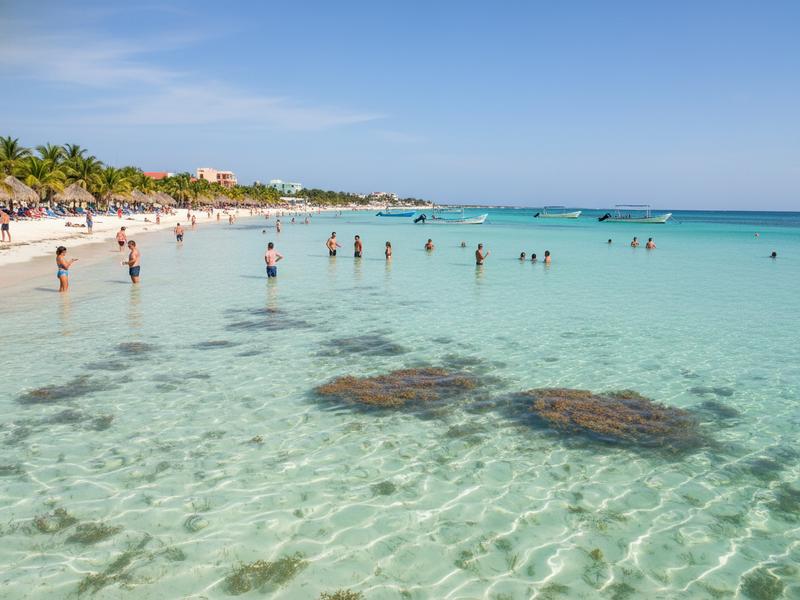
If your dates are fixed and the Caribbean forecast looks bad, Mexico still gives you excellent beach options.
Puerto Vallarta is the easiest swap for many travelers because it has strong flight access, a real town, food, tours, and beaches without Caribbean seaweed. Summer brings humidity, afternoon storms, and green hills. The bay can be calmer than open Pacific beaches, but water color is usually emerald or deep blue rather than Cancun turquoise. Start with our Puerto Vallarta travel guide.
Huatulco is a better pick if you want bays, snorkeling, and a quieter Oaxaca coast trip. It has protected coves, no sargassum, and a different rhythm from the Riviera Maya. Summer can be hot and rainy, but the bay structure gives you options. Our Huatulco Mexico guide covers the main beach areas.
Zihuatanejo works for travelers who want a Pacific beach town with better food, a slower bay, and less resort sprawl. Los Cabos gives luxury resorts and desert scenery, but many beaches are not swimmable because of currents. La Paz is excellent for calm water, islands, sea lions, and a less packaged Baja trip. The safest choice depends on what you value: turquoise color, swimming, dining, nightlife, or wildlife.
If you still want Caribbean color, choose Isla Mujeres, Cozumel west coast, or a Cancun Hotel Zone base with ferry access. If you want certainty against seaweed, switch coasts.
A Flexible 7-Day Sargassum Season Itinerary
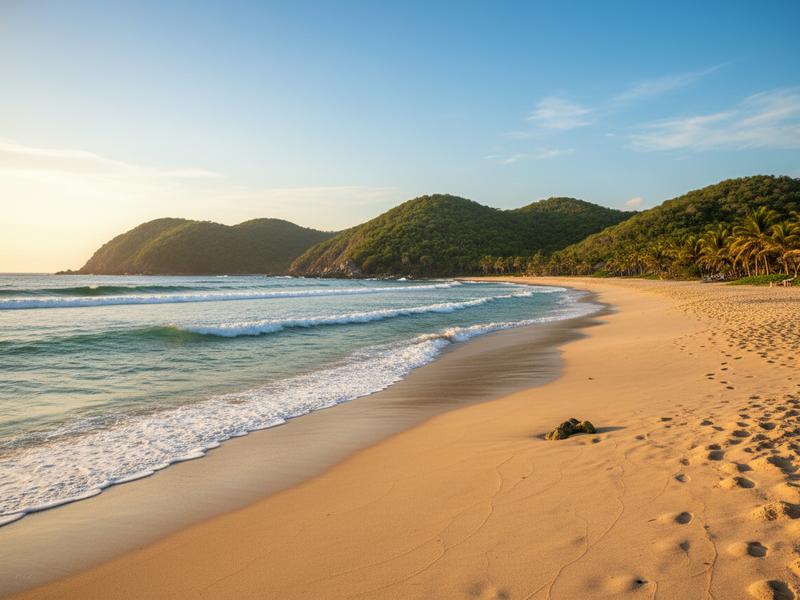
Here is a practical plan for a summer Caribbean trip that does not collapse if the beach is messy.
Day 1: Arrive in Cancun or Playa del Carmen. Do not schedule a paid beach club on arrival day. Check live maps, ask the hotel what cleanup looked like that morning, and walk the beach before committing to the next two days.
Day 2: Use the clearest local beach early. Sargassum often looks and smells worse after sun and heat. Go before 10 AM, then move to pools, lunch, or air-conditioned downtime. If the local beach is bad, book a ferry or cenote day instead.
Day 3: Island pivot. From Cancun, take the ferry to Isla Mujeres. From Playa del Carmen, take the ferry to Cozumel. Budget $16-35 USD ($272-595 MXN) per adult for round-trip ferry costs depending on route. Add golf cart rental in Isla Mujeres if you want to explore, usually around $70-100 USD ($1,190-1,700 MXN) for the day.
Day 4: Inland reset. Visit cenotes, Valladolid, Chichen Itza, Coba, or a food-focused town day. Seaweed cannot touch inland Mexico. This is where a trip becomes richer than just “beach or no beach.”
Day 5: Resort day or beach club only after checking conditions. Do not prepay a non-refundable club if live maps show heavy arrivals. If water is clear, enjoy it. If not, spend the money on a spa, cooking class, ruins, or snorkeling from a protected island side.
Day 6: Wildlife or reef day. Summer is whale shark season near Isla Mujeres and Holbox. If you book a tour, choose a certified operator, expect $100-170 USD ($1,700-2,890 MXN) per person, and understand that open-water conditions can cancel trips. Read our swim with whale sharks in Mexico guide before booking.
Day 7: Keep the final morning open. If the beach is clear, you get one last swim. If not, you are not emotionally trapped because you already built variety into the week.
Final Advice for Mexico Sargassum Season
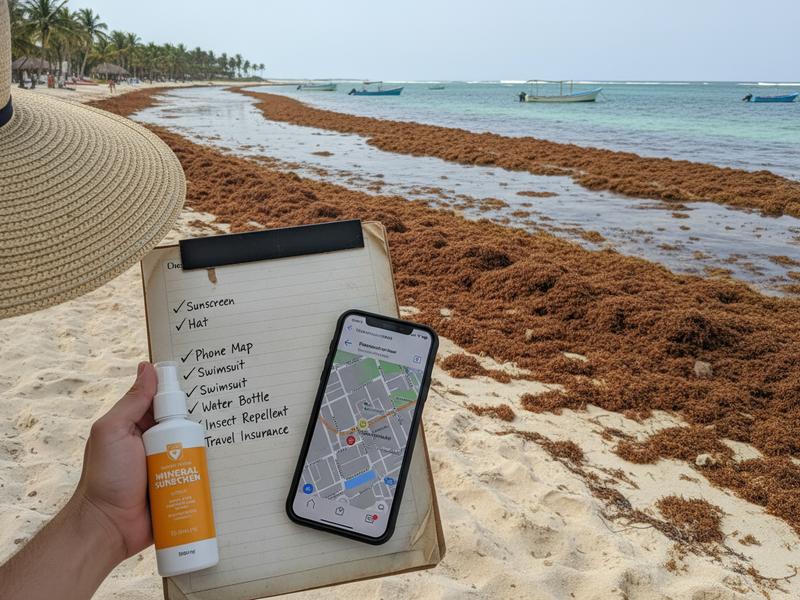
The worst sargassum trips happen when travelers treat the problem as a yes-or-no question months before departure. The better question is: what will I do if my first-choice beach is bad for two days?
If you want the simplest answer, choose winter for the Mexican Caribbean or choose the Pacific in summer. If you want Cancun, Playa del Carmen, Tulum, or Akumal in June, July, or August, build a flexible trip with good pools, inland day trips, ferry options, and live-condition checks. The seaweed may be light. It may be heavy. Your plan should work either way.
For the next step, use the specific guides in this cluster: Cancun sargassum season for the Hotel Zone, Playa del Carmen sargassum season for walkable Riviera Maya logistics, Isla Mujeres sargassum season for the clean-water island pivot, and Mexico beaches without sargassum if you are ready to switch coasts.
How I Would Decide If Booking Today
If I were booking a first Mexico beach trip for July, I would not make the decision from a single sargassum headline. I would ask three questions. First: do I need Caribbean water color, or do I mainly need a warm beach vacation? Second: will I be upset if two beach mornings are unusable? Third: do I have enough budget for backup days without feeling punished?
If the answer to the first question is yes, stay in the Caribbean but choose a flexible base. Cancun, Isla Mujeres, and Cozumel are easier to defend than a remote exposed beach. If the answer to the second question is yes, move to winter dates or switch to the Pacific. If the third answer is no, do not book a bargain room on an exposed beach and hope. The cheapest sargassum-season trip can become expensive when you start buying last-minute tours, taxis, beach clubs, and ferry tickets to escape the shoreline.
What live maps can and cannot tell you
Live maps are useful, but they are not magic. Satellite tools can show regional risk and floating mats offshore. Local beach reports can show what arrived that morning. Neither can promise what the exact hotel beach will look like at 9 AM next Thursday. That is why I treat maps as a decision layer, not a guarantee.
Check regional tools 10 to 14 days out to understand the trend. Check live beach maps three to five days out to decide whether to change hotels or add island plans. Check hotel messages and current guest photos 24 to 72 hours out. On the ground, walk the beach before paying for loungers or a club day. The closer the data is to your actual beach and actual date, the more weight it deserves.
How sargassum changes different trip styles
Families need shade, pools, short transfers, and simple backup meals. A seaweed day with toddlers is much harder if every alternative requires a two-hour drive. Couples can handle more improvisation, but a romantic beachfront splurge loses value fast if the room smells like decomposing seaweed. Solo travelers and friend groups may be happiest in Playa del Carmen or Cancun because restaurants, nightlife, and ferries keep the trip social even when the beach is off.
Luxury travelers should not assume high rates solve nature. Expensive hotels usually clean better and communicate faster, but they cannot stop offshore mats from landing. Budget travelers should not assume low rates are harmless. If you save $400 USD ($6,800 MXN) on the hotel but spend $500 USD ($8,500 MXN) escaping the beach, the bargain disappears.
A simple beach-risk ranking for summer
For peak sargassum months, I would rank Mexico options like this for seaweed risk. Lowest risk: Pacific and Baja beaches such as Puerto Vallarta, Huatulco, Zihuatanejo, Los Cabos, La Paz, and Mazatlán. Low to moderate Caribbean risk: Isla Mujeres Playa Norte, Cozumel west coast, and protected Cancun sections. Moderate to high risk: Cancun east-facing beaches, Puerto Morelos, central Playa del Carmen, Akumal, and Tulum. Highest emotional risk: any expensive, non-refundable beachfront stay where the beach is the only reason you booked.
That ranking is not a moral judgment on the destinations. Tulum can be wonderful. Playa del Carmen can be a great base. Cancun can have bad days. Puerto Vallarta can be rainy. The ranking only answers one question: where is sargassum most likely to affect the part of the trip you care about?
What to ask before you book
Ask the hotel: How often do you clean the beach during sargassum season? Do you use barriers? Which month had the heaviest arrivals last year? Can guests access nearby partner beaches or pools if the shoreline is affected? Are beach photos on the booking page from winter or recent months? If the reply is vague, that tells you something.
Ask yourself: would I still choose this hotel if I used the pool more than the ocean? Is the location good for restaurants and day trips? Can I cancel or move dates? Do I have a plan for children, older travelers, or anyone who does not enjoy long hot transfers? Those questions make the difference between a flexible Mexico trip and a week spent refreshing beach cameras in a bad mood.
My honest recommendation
For a first-time Caribbean Mexico trip, I would choose late November through April if beach clarity is the priority. For summer, I would choose Cancun plus Isla Mujeres or Playa del Carmen plus Cozumel only if I also wanted cenotes, food, ruins, and pool time. For a beach-first summer vacation, I would seriously compare Puerto Vallarta, Huatulco, Zihuatanejo, Los Cabos, or La Paz before paying Caribbean resort prices.
Sargassum is frustrating because it feels unfair: you can do everything right and still meet a bad current week. The way to beat it is not denial. It is building a trip with enough Mexico in it that one messy shoreline cannot take the whole vacation hostage.
Mistakes that make sargassum worse than it needs to be
The first mistake is treating the cheapest beachfront rate as a win. Summer discounts often exist for a reason: heat, rain, storm risk, and seaweed. A $160 USD ($2,720 MXN) room on an exposed beach is not automatically better than a $210 USD ($3,570 MXN) room with a stronger pool, better location, and flexible cancellation. Value is not only the nightly rate; it is how many usable days the booking gives you.
The second mistake is trusting one social media clip. Sargassum photos go viral because they look dramatic, but they rarely explain beach angle, exact date, cleanup status, or what the beach looked like two days later. Use photos as warnings, not final verdicts. A better pattern is to compare several current reports from the same area and then ask your hotel direct questions.
The third mistake is trying to outrun sargassum every morning without a plan. If you wake up, panic-scroll maps, argue about taxis, and leave at noon, you will spend the hottest part of the day chasing better water. Decide your backup rules before arrival: if the beach is heavy by 8 AM, go to a cenote; if Cancun is heavy for two days, ferry to Isla Mujeres; if the whole Caribbean looks bad before departure, consider changing hotels or coasts.
Packing and health notes
Sargassum does not require special gear, but a few choices help. Bring sandals you can rinse, a dry bag for ferry days, light clothing for humid backup activities, and sun protection that works when you spend more time walking docks or ruins than lying under an umbrella. If anyone in your group has asthma or strong smell sensitivity, avoid hotels where decomposing seaweed piles are common near rooms or restaurants.
Travel insurance can be useful, but read the policy carefully. Most basic policies will not reimburse a trip simply because the beach has seaweed. They may help with storms, medical issues, delays, or cancellations for covered reasons. If you are booking during hurricane season, understand what is and is not covered before you pay non-refundable rates.
How this cluster should guide your next click
Use this pillar as the decision page, then move into the spoke that matches your likely booking. Cancun is for resort backup and first-time convenience. Playa del Carmen is for walkability and Cozumel access. Isla Mujeres is for the best quick clean-water pivot from Cancun. Cozumel is for west-coast beach clubs, snorkeling, diving, and the Playa del Carmen ferry backup. The no-sargassum beaches guide is for travelers ready to leave the Caribbean rather than manage uncertainty. That structure prevents cannibalization: each page answers a different booking decision.
Final pre-trip checklist
Two weeks before arrival, check regional sargassum trend lines, but do not make emotional decisions yet. One week before arrival, check beach-level maps and recent hotel reviews. Three days before arrival, message the hotel and ask for current beach conditions. On arrival day, walk the beach before paying for chairs, club passes, or boat trips.
Keep one flexible day near the middle of the trip. If the beach is clear, use it for the ocean. If seaweed is heavy, use it for the activity you were already curious about: cenotes, ruins, an island, a food tour, a spa day, or a town visit. The psychological benefit is huge because you are not “losing” a beach day; you are using the alternate plan you already built.
Finally, be fair to the destination. Sargassum is a real nuisance, but Mexico is not only a shoreline. Some of the best summer memories happen away from the sand: Valladolid after rain, a quiet cenote in the morning, tacos after a storm, a ferry ride to clearer water, or a Pacific bay with green hills behind it. Plan for the problem, then let the country be bigger than the problem.
If you are booking for July or August specifically
July and August need the most discipline because they combine high sargassum odds with school holidays. That means more families, more pressure on ferries, fuller resorts, and less patience when everyone is trying to solve the same problem at once. Book backup activities early enough to have options, but avoid non-refundable beach purchases until conditions are clear.
For Cancun, I would protect one Isla Mujeres day and one cenote day. For Playa del Carmen, I would protect one Cozumel day and one inland day. For Tulum, I would protect at least two non-beach days because cenotes, ruins, and food are already part of the destination’s strength. For Akumal or Puerto Morelos, I would make sure the hotel itself is strong enough to carry a rough shoreline.
If you are traveling with a group, agree on the rules before arrival. Some people will want to chase a better beach; others will prefer the pool. Decide how much time and money you are willing to spend moving around. A clear rule such as “if the beach is heavy after breakfast, we switch to the planned backup” prevents the day from turning into a debate.
Why this topic deserves its own cluster
Sargassum has moved from a minor beach nuisance to a real booking factor for Mexico travel. It affects destination choice, hotel choice, trip month, activity budget, and traveler satisfaction. A single paragraph inside a weather guide cannot answer all of that. Cancun, Playa del Carmen, Isla Mujeres, and Pacific alternatives each need separate advice because the right recommendation changes by base.
That is also why this pillar avoids promising one perfect beach. The more useful service is helping you choose a trip that can bend without breaking. In summer, flexibility is not a nice extra. It is the main product.
The safest mindset is simple: book the Mexico you can enjoy in more than one way. If the water is clear, swim. If it is not, your trip should already have a second answer ready. Book with that flexibility and sargassum becomes a manageable variable, not the story of the whole vacation.