Day of the Dead in Michoacán 2026 Guide
Day of the Dead in Michoacán 2026 at a Glance
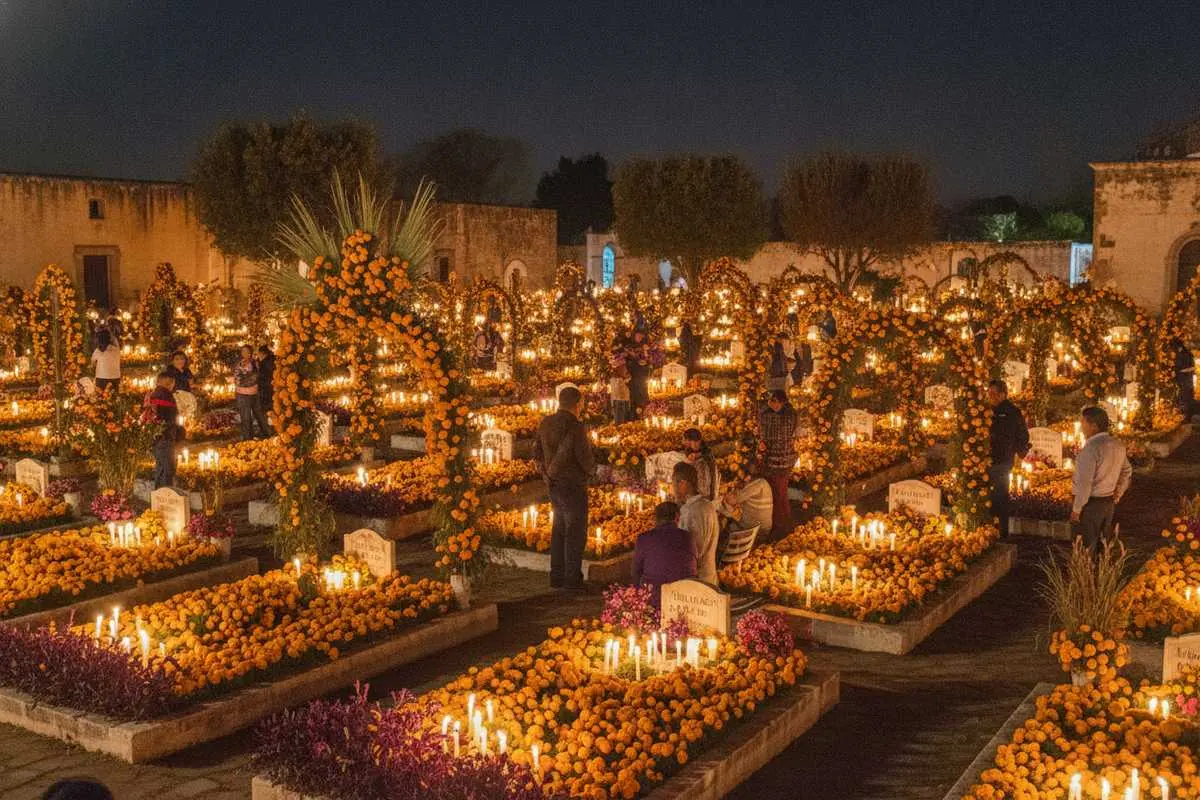
Day of the Dead in Michoacán 2026 centers on the Lake Pátzcuaro region from October 29 to November 2, with the main Night of the Souls observance beginning on November 1 and continuing into the morning of November 2. Pátzcuaro acts as the transport and lodging hub. Janitzio supplies the famous boat crossing and island vigil. Tzintzuntzan, Ihuatzio, Santa Fe de la Laguna, Jarácuaro, and smaller communities each maintain their own form of remembrance.
This is not one ticketed festival with a single entrance. It is a set of family and community observances surrounded by public markets, performances, exhibitions, food, and visitor services. The event can be visually striking, but its purpose is remembrance. A good trip makes room for both facts: travelers may attend, and families are not performing grief for travelers.
The regional Festival of Souls visitor site lists the 2026 program and community background. The Michoacán government also publishes practical guidance close to the event. Details here were checked on August 24, 2026; recheck the official program and local road notices before departure.
| Essential detail | 2026 planning answer |
|---|---|
| Festival window | October 29–November 2 |
| Main vigil | Night of November 1 into November 2 |
| Best trip dates | October 30–November 3 |
| Main base | Pátzcuaro |
| Airport option | Morelia International Airport (MLM) |
| Morelia to Pátzcuaro | About 53 km |
| Janitzio access | Boat from a Pátzcuaro pier |
| Typical boat fare | Plan MXN 100–180 ($6–$11 USD) return |
| Night temperature | Often about 7–12°C (45–54°F) |
| Best first trip | Three or four nights |
The national Day of the Dead Mexico guide explains dates, altars, and celebrations across the country. This guide focuses on how to travel through Michoacán without confusing a sacred regional observance with a parade made for spectators.
What makes the Michoacán observance different?
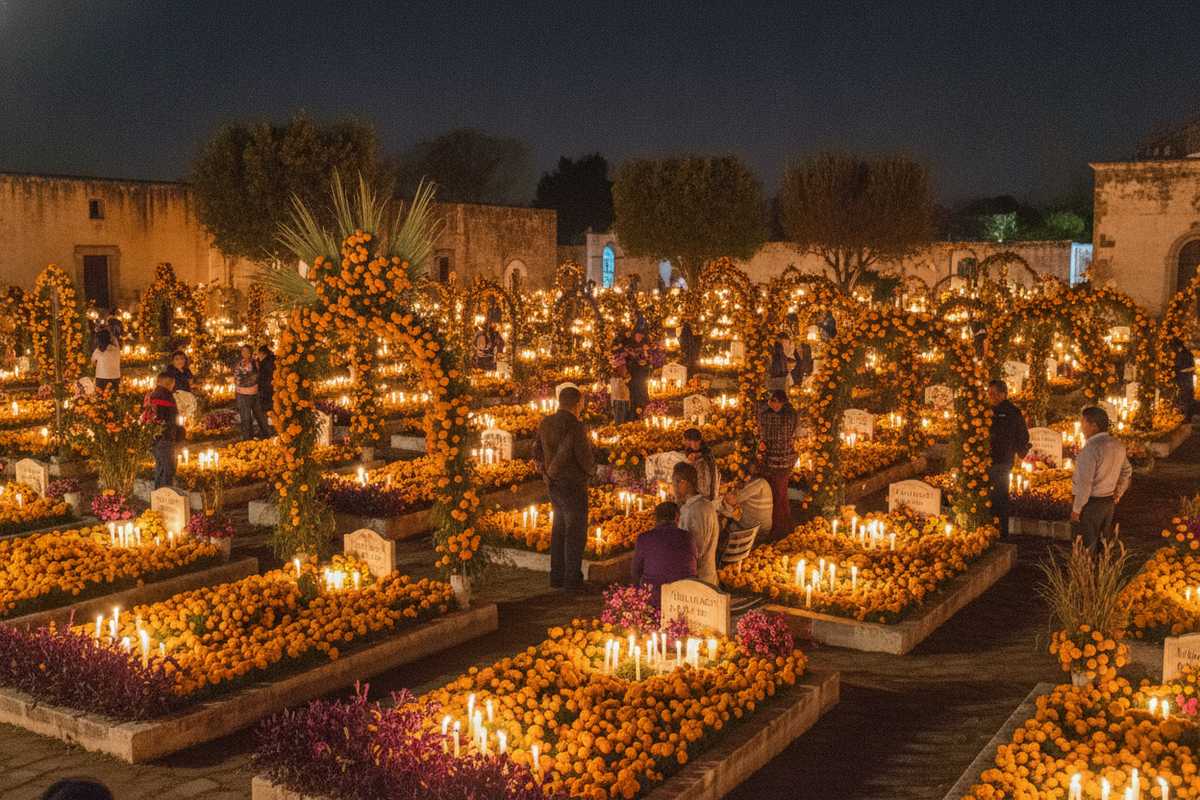
The Lake Pátzcuaro ceremonies are rooted in Purépecha communities. Homes, church atriums, cemeteries, islands, and village streets become connected spaces of memory. Families prepare altars with cempasúchil, candles, fruit, bread, personal objects, and foods associated with the person who died. In several communities, floral arches mark the place prepared for a soul’s return.
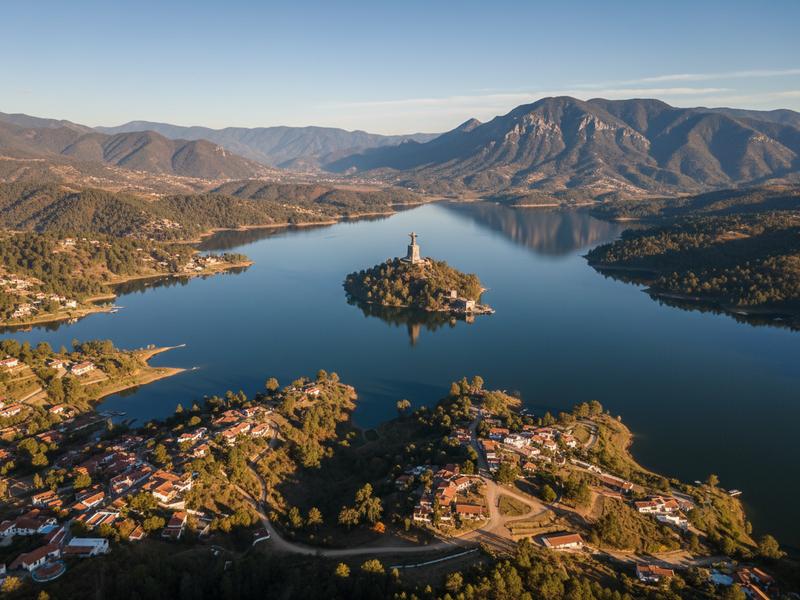
The public experience varies. Pátzcuaro has large craft and food markets, cultural programming, decorated plazas, and transport connections. Janitzio concentrates visitors onto boats, stairways, and a small island. Tzintzuntzan has two cemeteries beside a major archaeological and religious landscape. Smaller villages can feel quieter, but quiet does not mean unrestricted. The absence of a barrier is never permission to enter a private home or photograph a family.
First-time visitors sometimes try to see five communities in one night. That produces hours in traffic and little understanding. Choose one main late-night vigil, visit another place in daylight, and leave space to stop when local access changes. The goal is not to collect every cemetery.
Dates, Meaning, and the 2026 Sequence
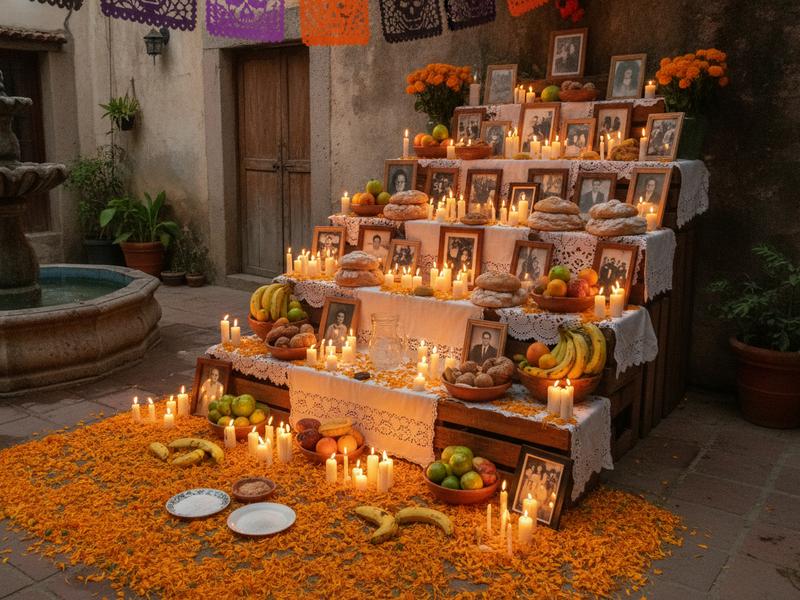
The public program begins before the core religious observance. From October 29 through October 31, expect markets, installations, music, exhibitions, craft demonstrations, altar displays, and preparations around Pátzcuaro. This is the best period for photographs of public decorations and for talking with guides or artisans without intruding on a cemetery vigil.
November 1 is often described as the day associated with children who have died, followed by the remembrance of adults. Exact sequences and local names differ by community. Avoid turning one simplified schedule into a rule for every Purépecha town. Ask a local guide what is appropriate at that place and hour.
The night of November 1 into November 2 is the travel peak. Families carry flowers and food to cemeteries. Candles remain lit through the cold hours. Boats to Janitzio can operate continuously, roads around the lake slow, central Pátzcuaro becomes heavily pedestrianized, and parking fills far from the main squares. November 2 continues with cemetery visits and public events, but some visitors depart early and create another wave of road traffic.
In 2026, November 2 falls on a Monday. That creates a long-weekend pattern for many domestic travelers. Expect room demand from Friday, October 30 through Monday night, not only on November 1. International visitors should arrive no later than Friday and avoid scheduling a nonrefundable flight from Morelia on Monday morning.
Understanding the language you will hear
Día de Muertos is the broad Spanish name. Noche de Muertos, Noche de Ánimas, and Fiesta de las Ánimas appear in regional visitor information. Purépecha words and community-specific customs add another layer. Use the terms local organizers use and do not correct families with vocabulary learned from a generic article.
An altar is not simply decoration. The photograph identifies the person being remembered. Water, salt, candles, incense, flowers, food, and personal possessions can carry particular meanings. The official Michoacán tourism description of Noche de Muertos explains how Janitzio, Tzintzuntzan, and Jarácuaro express the observance differently.
Face paint and costumes belong mainly to public plazas, commercial photo sessions, and some staged programs. They are not required for a cemetery. If you want Catrina makeup, do it for an appropriate public activity and remove or tone it down before entering a family vigil where it would make you the center of attention.
Choosing Pátzcuaro, Janitzio, Tzintzuntzan, or Morelia
Pátzcuaro is the best base for first-time visitors who want markets, restaurants, central hotels, frequent transport, and access to more than one community. Plaza Vasco de Quiroga and Plaza Gertrudis Bocanegra become busy public spaces. Learn the town’s normal layout before the holiday and allow the final week of preparations to change traffic, opening hours, and walking routes.
Janitzio is the iconic choice, but it is also the hardest place to visit comfortably. Everyone arrives and leaves by boat. The route from the pier climbs through narrow market lanes. The cemetery is small compared with the visitor flow. Go because the island’s history and lake setting matter to you, not because a social-media list says it is mandatory. Our Janitzio Day of the Dead guide explains boat strategy and etiquette.
Tzintzuntzan works well for travelers who prefer land access and want to see important cemetery vigils alongside craft traditions and the former Purépecha capital. It still becomes crowded, and parking controls can begin outside town. The two main cemeteries have different spatial rhythms, so follow local signs and keep gateways open. Read the Tzintzuntzan Day of the Dead guide before deciding on a late-night route.
Morelia is the fallback base when Pátzcuaro rooms are gone or extremely expensive. It has the region’s main airport, a large hotel supply, restaurants, and its own public Day of the Dead displays. The tradeoff is transport: the 53-kilometer route can take much longer during the holiday, and a late return requires a booked driver or tour.
How to choose without regretting it
Write down the one experience that matters most. If it is the lake crossing, sleep in Pátzcuaro and make Janitzio the only major outing that day. If it is a cemetery reached without a boat, choose Tzintzuntzan and reserve a driver. If it is Morelia’s food and architecture with one organized lake excursion, use Morelia and accept the transfer cost.
Next, remove any plan that depends on three uncertain links. A Morelia room, unbooked app car, late Janitzio boat, and spontaneous Tzintzuntzan visit create too many points of failure. A central Pátzcuaro room plus one prebooked night trip creates one. This is the most useful way to compare apparently cheaper itineraries.
Finally, consider your physical limits honestly. Janitzio requires boat boarding, steep lanes, crowds, and many steps. Tzintzuntzan avoids the boat but can involve a long walk from parking over uneven ground. Pátzcuaro is also cobbled and sits at high elevation. A shorter visit with a seated meal and warm hotel break is better than pushing until the night becomes unsafe.
Smaller communities can provide a more intimate experience only when you have a respectful local connection or a guide who knows current access. Santa Fe de la Laguna, Ihuatzio, Jarácuaro, Arócutin, Tzurumútaro, Yunuén, and others are not interchangeable alternatives to Janitzio. Each has its own schedule and tolerance for visitors. Do not arrive with a large group after midnight based on an old blog post.
A practical choice matrix
| Priority | Best fit | Main drawback |
|---|---|---|
| First trip without a car | Pátzcuaro | Highest room pressure |
| Famous lake crossing | Janitzio | Boats, queues, steep lanes |
| Cemetery vigil by road | Tzintzuntzan | Traffic and distant parking |
| More hotel choice | Morelia | Long late-night transfer |
| Quiet community context | Guided smaller village | Access changes and limited services |
| Photography of public displays | Pátzcuaro before Nov. 1 | Less intimate than village observance |
Transport, Road Closures, and Lake Logistics
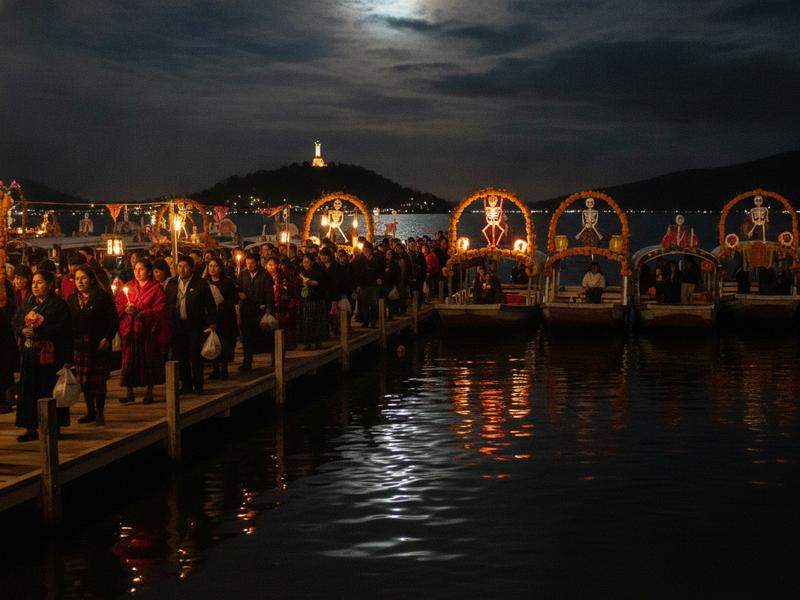
Morelia International Airport is the most useful air gateway, but it is northeast of Morelia and on the opposite side of the city from Pátzcuaro. A direct private transfer may take 1.5–2.5 hours depending on traffic. Plan MXN 1,500–2,500 ($88–$147 USD) per vehicle during normal conditions and confirm the event-week quote in writing. A cheaper route combines an airport transfer to Morelia and a separate bus to Pátzcuaro, but it adds a connection.
From Mexico City, first-class buses to Morelia commonly take about four to five hours, followed by a roughly one-hour bus or shared ride to Pátzcuaro. Event traffic can add hours. Budget MXN 700–1,200 ($41–$71 USD) each way for the complete public-transport route, depending on terminal and service. From Guadalajara, buses to Morelia or Pátzcuaro usually take four to five hours; book the outward and return legs together.
The federal cultural tourism guide lists Morelia to Pátzcuaro as 53 kilometers. The distance looks easy, but November 1 is not a normal driving day. Police may redirect vehicles, temporary one-way systems appear, and visitors park far from the center. A rental car is useful for a longer Michoacán route, yet it is a liability for the main vigil unless your lodging includes confirmed parking and you plan to leave it there.
For Janitzio, buy a return boat ticket from an authorized pier and keep it dry. A recent traveler-reported fare was MXN 100 ($6 USD) return; use MXN 100–180 ($6–$11 USD) as a planning range until 2026 operators publish official prices. Ask three questions before boarding: which pier the boat returns to, whether the ticket works all night, and where the final return queue forms. Do not assume every launch serves every pier.
At night, mobile data can slow and app-based cars may not enter pedestrian or controlled zones. Save the driver’s phone number, hotel address, meeting point, and route offline. If you join a tour, ask whether “transport included” means door-to-door pickup or a central meeting point several blocks away.
Should you book a tour?
A well-run small-group tour is worth considering for November 1 because it solves a specific problem: the return. It should also provide cultural interpretation and set behavior expectations. Ask for the exact communities, group size, walking distance, departure window, guide credentials, and cancellation policy. Avoid operators that promise private access to families or unrestricted cemetery photography.
Typical event-night tours can cost MXN 1,500–3,500 ($88–$206 USD) per person. That is far more than local buses, but a driver waiting outside a road-control zone has real value at 2 a.m. Do not choose only by price. A rushed coach visiting four villages may deliver less meaning and more congestion than a three-hour guided visit to one place.
Public transport versus a private vehicle
Public buses and shared vans are useful before evening. They keep you out of parking controls and cost a fraction of a private car. The weak point is the final return: published normal schedules may not describe November 1, boarding areas can move, and a full vehicle may leave before everyone waiting can board. Confirm the last service with the operator that day and keep enough cash for a backup.
A private vehicle gives you storage and a guaranteed seat, not freedom from traffic. The driver needs a legal waiting area and a pickup point reachable after closures. Agree on a 30–60 minute pickup window rather than one exact minute. Pay a deposit through a traceable method and hold the final portion until the completed return, if the operator’s normal policy permits.
Visitors who rent a car should photograph the parking entrance, record the lot name, and save the route offline. Do not leave passports, luggage, or visible bags inside. Never follow an unmarked shortcut at night because a map suggests it saves ten minutes; stay on staffed, lit routes used by other visitors.
Where to Stay and What the Trip Costs
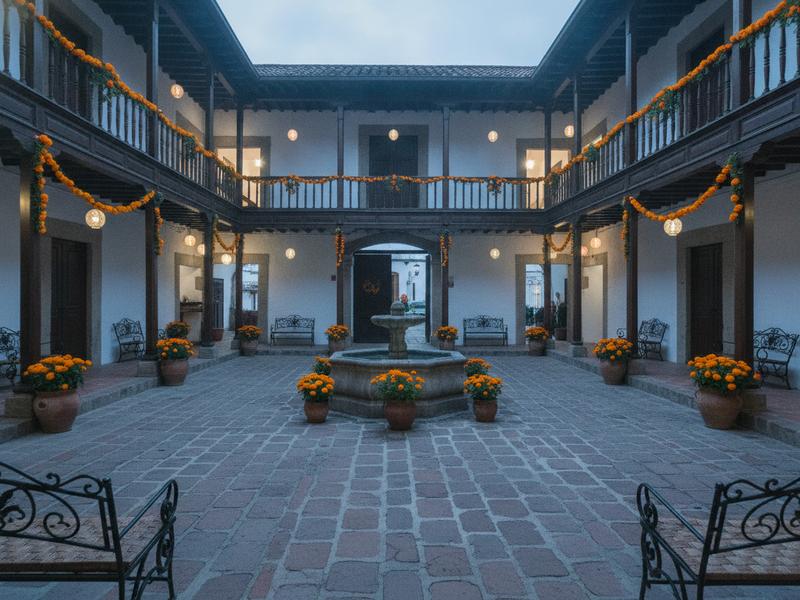
Reserve a refundable room as soon as you decide to travel. Central Pátzcuaro properties have limited inventory and some sell multi-night packages. A normal-season price visible online says little about October 30–November 2. Expect a basic room to start around MXN 1,500–2,500 ($88–$147 USD) per night and a well-located midrange room to reach MXN 3,000–6,000 ($176–$353 USD) or more during peak nights.
Location matters more than star rating. A room within a 10–15 minute walk of Plaza Vasco de Quiroga lets you eat, rest, and return without a vehicle. Check the exact walking route because “Centro” may include steep cobbles or stairs. Ask about street noise, hot water, heating, luggage storage, and whether the front desk remains staffed after midnight.
Tzintzuntzan and lakeside lodgings place you closer to a specific community, but restaurant choice and late transport are limited. Morelia offers the widest price range, from hostels to full-service hotels. It is best for travelers arriving by air, families needing modern amenities, and anyone willing to pay for a driver. Our where to stay for Day of the Dead in Michoacán guide compares these bases in detail.
Booking terms that matter during the holiday
Read the cancellation policy by calendar date and local time. A property may advertise “free cancellation” but end the window weeks before the event. Screenshot the room description, taxes, breakfast, minimum stay, bed type, parking, and payment schedule. If the hotel contacts you to change platforms or bank accounts, verify the request through its publicly listed number.
Ask what happens when roads close. Can staff carry luggage from a barrier? Is there a night entrance? Does reception remain open after a 2 a.m. tour return? Can the property arrange an authorized driver, and is the quoted price per vehicle or per person? Clear answers are worth more than a generic promise that transport is “easy.”
Book the night of November 2 even if you expect to leave that afternoon when the extra cost is manageable. The room becomes insurance against a late vigil, illness, or blocked road. It also lets you shower and sleep before a long bus or flight rather than spending the morning guarding bags in a crowded lobby.
A realistic three-night, per-person budget based on two people sharing is:
| Cost | Budget | Midrange | Comfortable |
|---|---|---|---|
| Lodging share | MXN 2,250 ($132) | MXN 5,250 ($309) | MXN 9,000 ($529) |
| Intercity transport | MXN 1,000 ($59) | MXN 1,800 ($106) | MXN 3,500 ($206) |
| Local transport and boat | MXN 500 ($29) | MXN 1,200 ($71) | MXN 2,500 ($147) |
| Food and drinks | MXN 1,500 ($88) | MXN 2,400 ($141) | MXN 4,000 ($235) |
| Guide or tour | MXN 0 | MXN 2,000 ($118) | MXN 3,500 ($206) |
| Crafts and extras | MXN 500 ($29) | MXN 1,000 ($59) | MXN 2,000 ($118) |
| Total | MXN 5,750 ($338) | MXN 13,650 ($803) | MXN 24,500 ($1,441) |
Conversions use MXN 17 per $1 USD and are rounded for planning. Carry pesos in small notes for markets, boats, tips, and food stalls. Use bank-attached ATMs during daylight and decline the machine’s offered currency conversion. Do not rely on a late-night ATM near a crowded pier.
Respectful Etiquette, Safety, and a Three-Day Plan
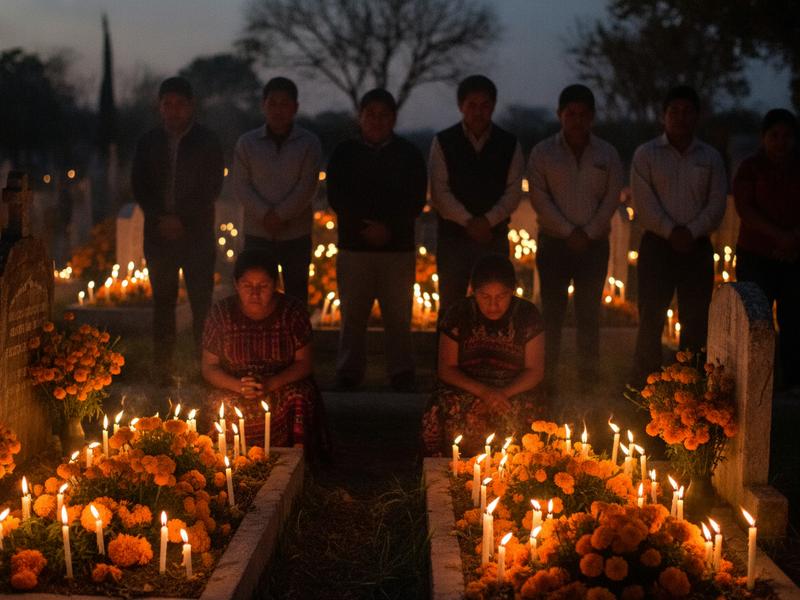
The Michoacán Culture Ministry’s visitor guidance for Pátzcuaro and Tzintzuntzan recommends warm clothing, comfortable shoes, walking in central areas, small secure bags, water, and light food for island visits. Those practical choices also make respectful behavior easier: you are less likely to block a path while rearranging a large backpack or leave early because you dressed for an afternoon plaza rather than a highland night.
Photography and social media boundaries
Set your rules before entering: no flash, no drone, no tripod, no live stream, and no image of an identifiable family without clear permission. A phone can be as intrusive as a professional camera when held inches from a grave. Take fewer frames, review them later, and never ask mourners to repeat an action.
Do not publish a child’s image based only on an adult standing nearby, and do not geotag a small private vigil. Captions should identify the public setting accurately without claiming to explain a family’s beliefs. Avoid language that turns residents into scenery or describes the night as spooky entertainment.
The most responsible photographic subjects are public market displays, town-wide decorations, landscapes, crafts offered for sale, and wide scenes taken from designated visitor areas. Even then, stop when local staff request it. No image is worth damaging trust between a community and future visitors.
At a cemetery, lower your voice before the gate. Turn off flash, focus-assist lights, and shutter sounds. Ask before photographing a person, child, grave, altar, or identifiable family scene. A wide image of public decoration is not the same as a close portrait of mourning. If the answer is no, accept it without negotiation. Never move a candle, flower, food item, or chair for a better frame.
Alcohol may be available in public areas, but arriving visibly drunk at a vigil is disrespectful and unsafe. Keep valuables minimal, use a crossbody bag, and separate your bank card from most cash. Crowds and darkness create ordinary pickpocketing risk. They also make family members easy to lose, so choose a meeting point outside the cemetery and carry a small power bank.
Weather is another risk. Pátzcuaro sits above 2,000 meters, and a dry-looking afternoon can become a cold night. Pack a warm jacket, rain shell, closed shoes with grip, water, tissues, and any medicine you need. Candle wax, uneven stone, mud, and steps make fashion shoes a poor choice.
For a first trip, use this sequence:
- October 31: Arrive or settle into Pátzcuaro, walk the public plazas and markets, visit craft displays, and have an early night.
- November 1 daylight: Visit Janitzio early or explore Pátzcuaro and a lakeside village with a guide. Return to rest, eat, and add warm layers.
- November 1 night: Choose one main vigil—Tzintzuntzan, Janitzio, or a guide-approved community—and stay long enough to experience its rhythm without rushing onward.
- November 2: Sleep, eat a late breakfast, visit public exhibitions, and avoid a tightly timed departure.
The complete Michoacán Day of the Dead itinerary turns that outline into timed options for three and four days.
Food, water, and altitude
Eat a full meal before the late vigil. Markets offer excellent snacks, but long transport queues can outlast a bag of bread. Carry water and something simple such as nuts or a packaged bar, then take every wrapper out with you. Ask stallholders about prices and ingredients before ordering, especially when allergies are serious.
Pátzcuaro’s elevation can amplify dehydration, headache, fatigue, and the effect of alcohol. Make the first day light, drink water, and do not combine an overnight vigil with heavy drinking. Travelers arriving from sea level should treat breathlessness on steep Janitzio lanes as a signal to slow down, not a challenge.
Public toilets may cost MXN 5–10 ($0.30–$0.60 USD) and run short of paper late at night. Carry coins, tissues, and sanitizer. Use a toilet before boarding a boat or joining a cemetery line. Small preparation prevents the kind of urgent movement that disrupts crowded, solemn spaces.
Keep one flexible half-day in the schedule. Holiday programs, lake weather, traffic controls, and community access can all change after you arrive. That open block can absorb a delayed bus, a canceled boat, or the need for sleep after the vigil. If nothing goes wrong, use it for Pátzcuaro’s craft market, the Museo de Artes e Industrias Populares, a long lunch, or a quiet walk away from the main squares. A buffer is not wasted vacation time here; it is what lets you respond calmly instead of forcing a rigid plan onto a living observance.
The best memory will probably not be the busiest scene. It may be the smell of wood smoke near a market, a quiet explanation from a guide, the care placed into one floral arch, or the moment you decide not to take a photograph. Build the trip around attention, not proof that you were there.