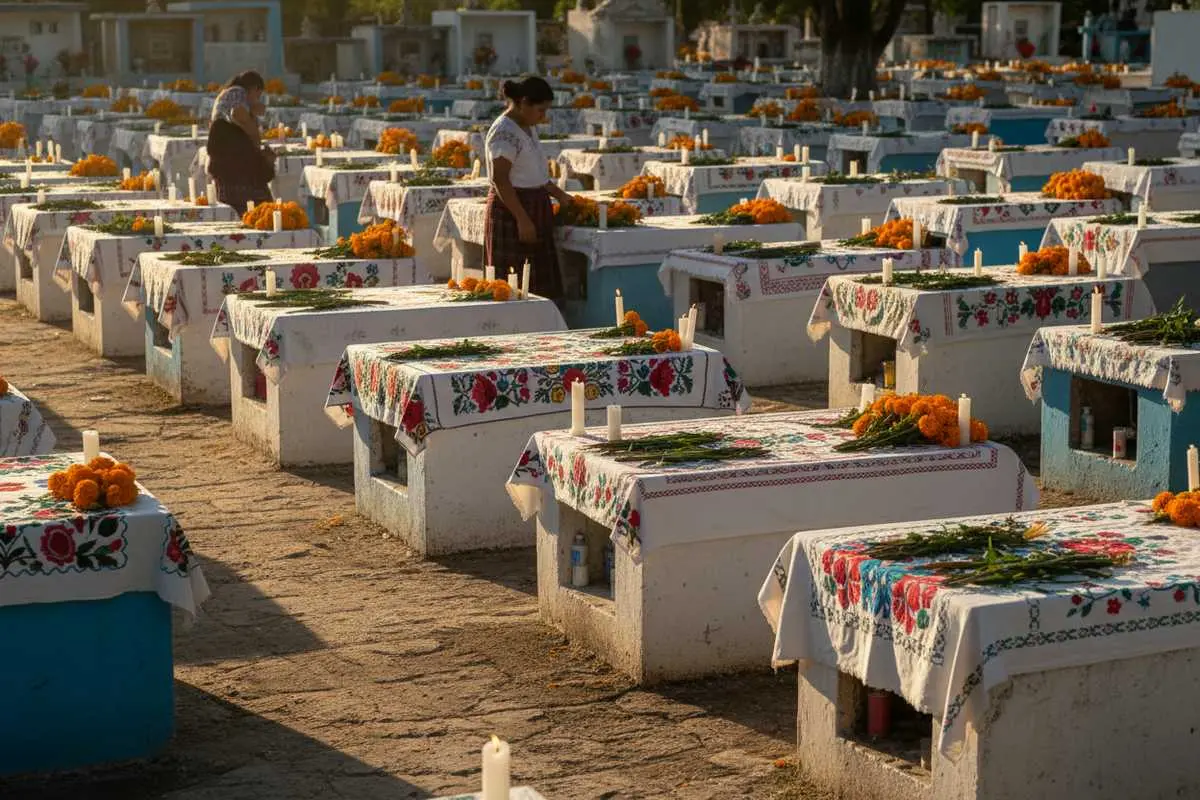
Pomuch Day of the Dead 2026: Respectful Guide
Why Pomuch Is Different
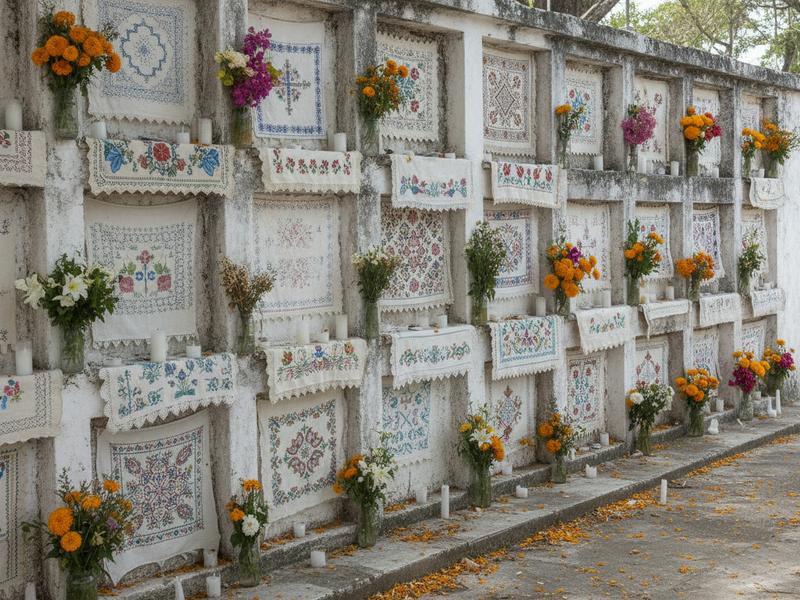
Pomuch Day of the Dead travel requires more care than attending a city parade. In this Maya community in northern Campeche, some families clean and rewrap the bones of relatives kept in small cemetery ossuaries. The practice is commonly called Choo Ba’ak, or the cleaning of the bones.
The National Institute of Anthropology and History explains that relatives use a small brush to remove dust, wrap the bones in embroidered cloth bearing names or religious motifs, and return them to individual boxes. Families may speak to the person, share news, pray, decorate the niche, and bring food or flowers.
There is no stage between you and the ritual. A person handling remains is caring for a parent, grandparent, spouse, sibling, or child. The right way to visit begins with that fact.
Pomuch also has more than cemetery customs. It is known across Campeche for bread baked in stone ovens, small-town streets, family kitchens, and its place along the Camino Real between Mérida and Campeche City. A respectful visit includes buying bread, eating locally, and seeing the community as more than a single dramatic image.
For the wider Maya remembrance season, read our Hanal Pixán Yucatán guide. It explains the October 31–November 2 sequence and how Pomuch relates to traditions across the peninsula.
Choo Ba’ak and Janal Pixán Explained
Janal Pixán means food for the souls and is the Campeche spelling you will often see for the tradition also written as Hanal Pixán in Yucatán. The remembrance joins Maya relationships with land, maize, ancestors, and time with Catholic prayers and All Saints’ observances.
In Pomuch, the deceased remain physically present in above-ground ossuaries. After an initial burial period and the appropriate local process, bones may be transferred to a wooden box within a niche. Annual care allows relatives to remain in contact with the person through touch, speech, cleaning, wrapping, and offerings.
An INAH feature on Pomuch ritual life connects the season with October rains, new maize, family memory, and community identity. It also makes clear that the custom cannot be reduced to a strange spectacle. The bones are neither props nor museum objects.
When the cleaning happens
The core remembrance dates are October 31, November 1, and November 2, but preparation begins earlier. Families may clean niches and bones on different days based on work, weather, family plans, and cemetery conditions. INAH notes that remembrance in Pomuch can extend through November, with fresh food placed weekly.
Do not assume you will see exposed remains simply because you arrive on November 1. Do not ask a family to open a box for you. A visit still has value when all you see are flowers, cloths, candles, bread, and relatives spending time together.
What the embroidered cloth means
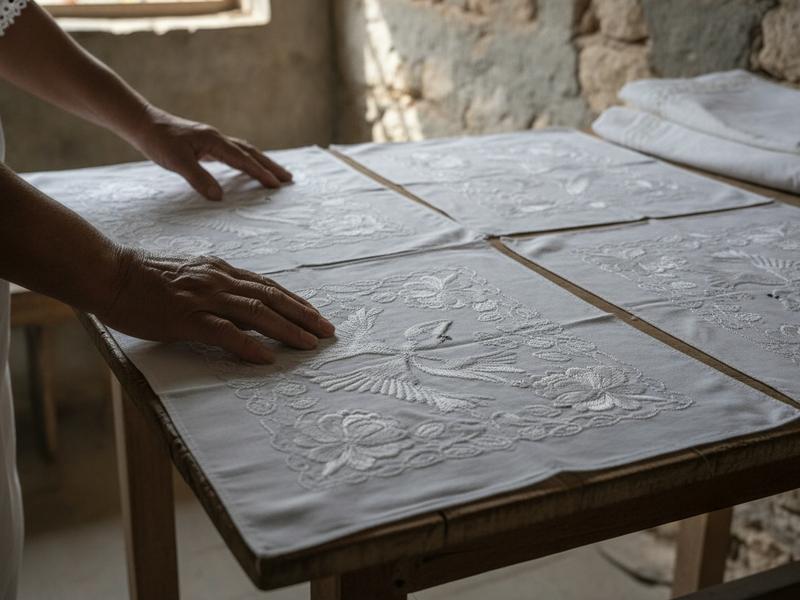
Fresh cloths protect and dignify the remains. They may include a person’s name, a cross, a dove, flowers, or other family-selected motifs. Some are handmade locally. Do not touch, unfold, or reposition them.
The care given to a cloth is part of the continuing relationship with the dead. A close photograph without permission can turn that care into a souvenir, which is precisely what a respectful traveler should avoid.
When to Visit Pomuch in 2026
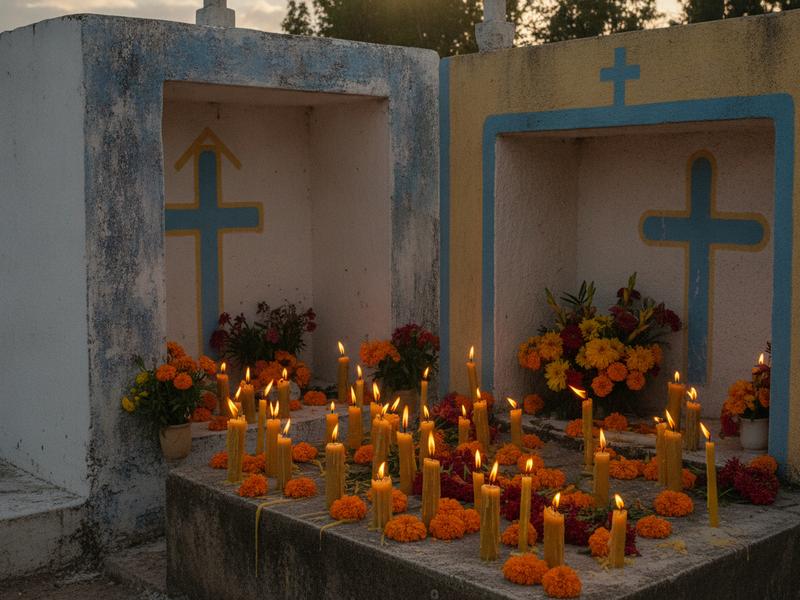
The traditional 2026 dates fall from Saturday, October 31 through Monday, November 2. Visit between October 29 and November 2 if you want to see the community during its busiest remembrance period. Visit later in November for a quieter town, although there is no guarantee that a particular family practice will be visible.
Daylight is best. Aim for 9 a.m. to 1 p.m., then spend lunch and early afternoon in town. Cemetery hours and any organized 2026 activities should be checked locally because reliable English schedules are limited.
Avoid arriving with a large, unannounced tour group. Ask a Campeche-based cultural guide or your hotel to arrange a small visit. A useful guide introduces the community context, explains when photography is inappropriate, and ensures your spending reaches local people.
Weather
Late October is warm and humid, with daytime temperatures often around 28–32°C (82–90°F). Rain remains possible. Wear light clothing that covers shoulders and knees, comfortable closed shoes, and a hat. Carry water and insect repellent, but do not spray repellent near graves, flowers, or other people.
The cemetery may have uneven ground and narrow passages. Skip heels and large backpacks. A compact crossbody bag keeps your hands free and reduces the risk of brushing against an ossuary.
How long to stay
Two or three hours in Pomuch is enough for the cemetery, bakery stops, and lunch. A rushed 20-minute photo stop is disrespectful and gives you no understanding of the place. An overnight stay is not essential because lodging is limited; Campeche City or Mérida provides a stronger base.
How to Get to Pomuch
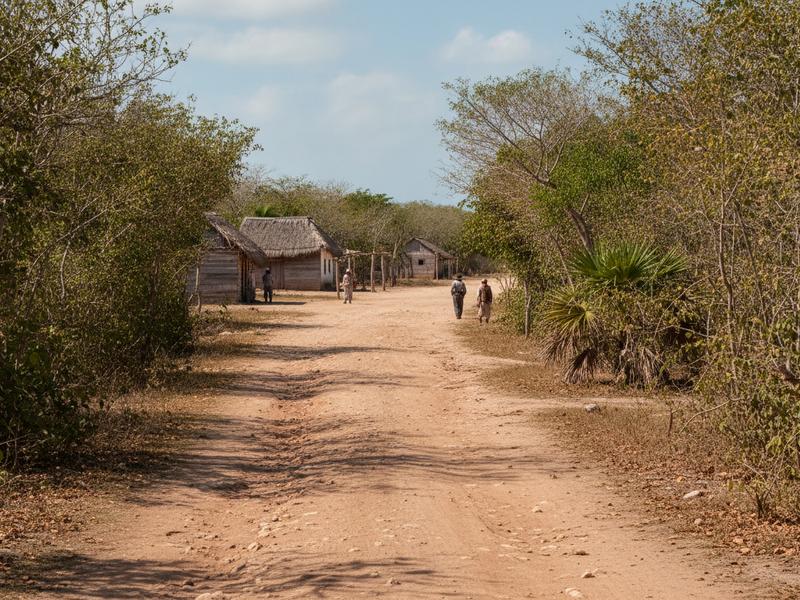
Pomuch sits about 52 kilometers, or 32 miles, north of Campeche City. Driving takes roughly one hour in normal conditions. Mérida is farther, commonly around 110 kilometers or 68 miles away, with a drive of about 1 hour 45 minutes before traffic.
Campeche City is the recommended base. It keeps the transfer short and gives you more control over timing. A private driver for a half or full day may cost MXN 1,750–3,500 ($100–$200 USD), depending on waiting time, vehicle, guide service, and festival demand. Confirm whether parking, tolls, and guide fees are included.
Second-class buses operate between Campeche and Pomuch, but schedules can change and online listings may not show holiday operations. Expect roughly MXN 70–140 ($4–$8 USD) each way. Buy at the station, ask where the return bus stops, and photograph the schedule.
Rental car
A car gives you flexibility for Hecelchakán, local bakeries, and an early return. A small automatic car may cost MXN 875–1,575 ($50–$90 USD) per day before full insurance. Add MXN 350–525 ($20–$30 USD) for fuel and incidentals for the day.
Do not drink and drive. Avoid unfamiliar rural roads after dark, and park without blocking homes, cemetery access, or local buses. Download the route before leaving Campeche.
Tren Maya
The Hecelchakán station is on the regional rail corridor, but the station is not the Pomuch cemetery. Timetables, last-mile taxis, and fares require separate planning. The train rarely beats a direct driver for a focused day trip because you still need local transport and must fit the cemetery visit around limited departures.
If you are building a longer peninsula route, compare it with the Maya Route guide and confirm all train details through the official operator shortly before travel.
Cemetery Etiquette and Photography
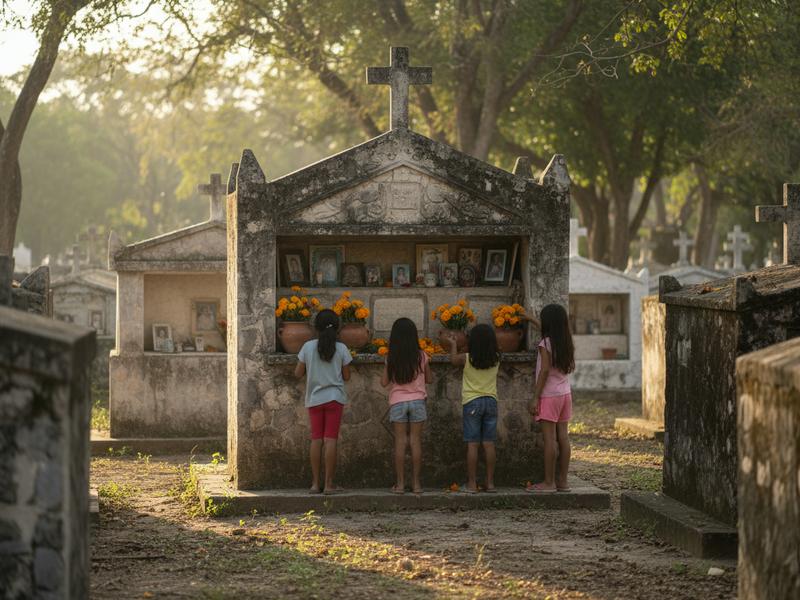
Enter quietly and follow posted signs. If a local guide gives an instruction, treat it as a boundary, not a suggestion. Keep pathways open and never stand between a family and its ossuary.
Ask before photographing any person or open box. Use a complete question such as “¿Me permite tomar una foto?” Point to your camera if language is difficult, then wait for an unmistakable yes. Silence, a shrug, or continued work is not consent.
Never use flash. Do not photograph children without a parent or guardian’s permission. Do not touch bones, cloths, boxes, candles, flowers, graves, or food. Do not lean over an ossuary for a close-up or ask someone to repeat an action.
Publishing creates another layer of responsibility. A family may accept a personal photograph without agreeing to a public social post. Ask separately if a person or identifiable niche will appear online. Do not add sensational captions about death, fear, or “macabre” customs.
Gifts and money
Do not hand a family cash in exchange for opening a box. Pay an agreed guide fee, buy local bread, eat at a local business, and purchase crafts or embroidered work from the maker. If a community organization requests a transparent donation, ask what it supports.
A locally guided half-day may cost MXN 875–1,750 ($50–$100 USD) per person for a small group, before transport. Prices vary, so request the guide’s name, group size, meeting point, and whether community fees are included.
What not to wear
Skip elaborate catrina makeup, skull masks, or costume photography in the cemetery. Wear clean, modest clothes in neutral or ordinary colors. You do not need to imitate local clothing to show respect.
Traveling with children
Parents should think carefully before taking young children into the cemetery during bone cleaning. The practice is calm and loving, but exposed human remains may be confusing or upsetting. Explain what they may see in plain language and give them permission to leave at any time.
Keep children beside you and away from niches, candles, tools, and cloths. Do not encourage them to pose near an ossuary. A bakery visit, town walk, or public cultural display may offer a more appropriate introduction for younger travelers.
Questions a good guide should answer
Ask how the guide is connected to Pomuch, how many people will join, and how permission is handled in the cemetery. Ask whether transport, community fees, bread tasting, and lunch are included. A guide should be comfortable telling guests to put cameras away.
Avoid an operator promising guaranteed close-up access to remains. Families decide if, when, and how they clean. No ethical guide can guarantee that a private act will occur for a tour group.
If no ritual is visible
Do not express disappointment. Walk the cemetery paths without lingering over open boxes, observe the care given to flowers and cloths, then leave. Buy bread, learn about the town’s Camino Real setting, and support a local meal.
The absence of a dramatic scene protects family privacy and does not make the visit unsuccessful. Your purpose is to understand a community practice, not to collect proof that it happened in front of you.
Heat, water, and health
Shade can be limited, and humidity builds quickly after rain. Carry at least one liter of water per person, take breaks outside the narrow cemetery paths, and use sunscreen before arriving. Do not eat inside the cemetery unless a local host specifically includes food in a public activity.
The nearest comprehensive medical services are easier to access in Campeche City. Carry prescribed medication, basic first aid, and the contact details for your driver or hotel. If weather warnings affect the highway, postpone the visit.
Bread, Food, and Supporting Pomuch
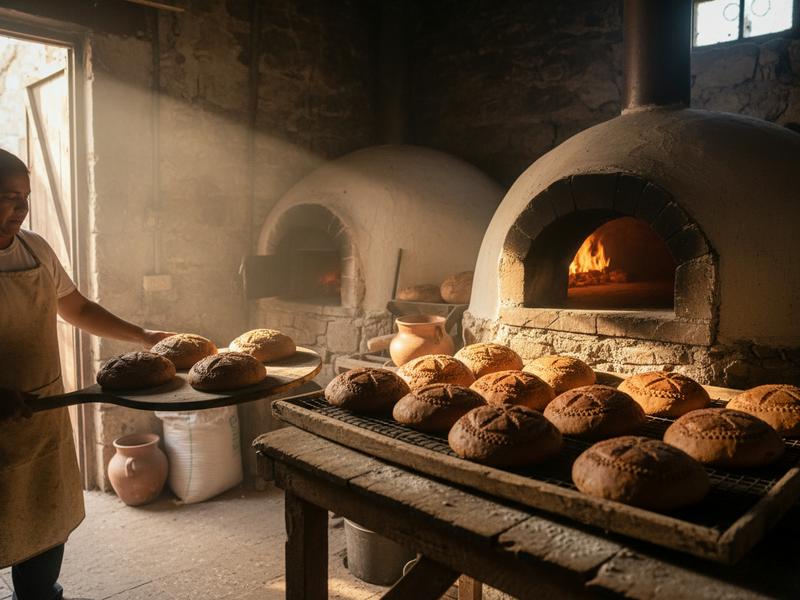
Pomuch bread is made in family bakeries using stone ovens heated with wood. The Campeche tourism board specifically encourages travelers on the Camino Real to stop for it. Ask which loaves are fresh and what locals pair with coffee or chocolate.
Budget MXN 35–105 ($2–$6 USD) for bread and MXN 140–280 ($8–$16 USD) for a simple local meal. Carry cash in small notes. Buy enough to take back to Campeche, but do not photograph bakery workers at close range without asking.
Seasonal foods can include pib or mucbipollo, atole, sweets, and family recipes connected with Janal Pixán. Our mucbipollo guide gives the food context. Remember that altar food is an offering unless a host serves it.
A responsible day plan
Leave Campeche City around 8 a.m. Arrive in Pomuch by 9 a.m. and meet your guide. Spend 60 to 90 minutes in the cemetery, moving slowly and taking few photographs. Visit a bakery and walk the center before lunch. Return to Campeche by 2 or 3 p.m.
Allow MXN 2,450–4,900 ($140–$280 USD) for two people using a private driver and local guide, including food and bread. Two travelers using buses independently might spend MXN 700–1,400 ($40–$80 USD) total, but the guide and transport certainty are worth the higher cost during the holiday.
Back in Campeche, use the evening for the walled center rather than another cemetery. If you want a contrasting public event, add Mérida’s Paseo de las Ánimas on a separate day.
Pomuch should leave you with fewer photographs than expected and more understanding than you arrived with. That is a successful visit.